
What Antimicrobial Treatment Actually Does to Microbial Contamination
Professional antimicrobial treatment is not a cleaning service, and it is not a mould spray. It is the targeted application of biocidal agents — scientifically formulated products that destroy microbial organisms at a cellular level — across affected surfaces, materials, and air spaces. Where cleaning removes visible contamination from a surface, antimicrobial treatment penetrates the microbial cell structure itself, disrupting the biological processes that allow organisms to survive, reproduce, and recolonise treated areas.
The result is a measurable reduction in microbial load across treated surfaces, combined with a period of residual protection that continues working after the technician has left the property. This residual action is what separates professional antimicrobial treatment from any product available at a hardware store — consumer sprays deliver a one-time contact kill with no ongoing protection, while professional-grade biocidal formulations are engineered to maintain active antimicrobial performance on treated surfaces for weeks or months depending on the product system applied and the environmental conditions of the Central Coast property.

What Professional Mould Cleaning Actually Involves
Professional mould cleaning is a structured, multi-step process — not a single product applied to a visible patch. It begins with a surface assessment to identify the affected areas, the mould species present where visible identification allows, and the likely moisture source driving the growth. Cleaning mould without identifying what is feeding it is the primary reason mould returns quickly after treatment, regardless of how thorough the clean appears on the day.
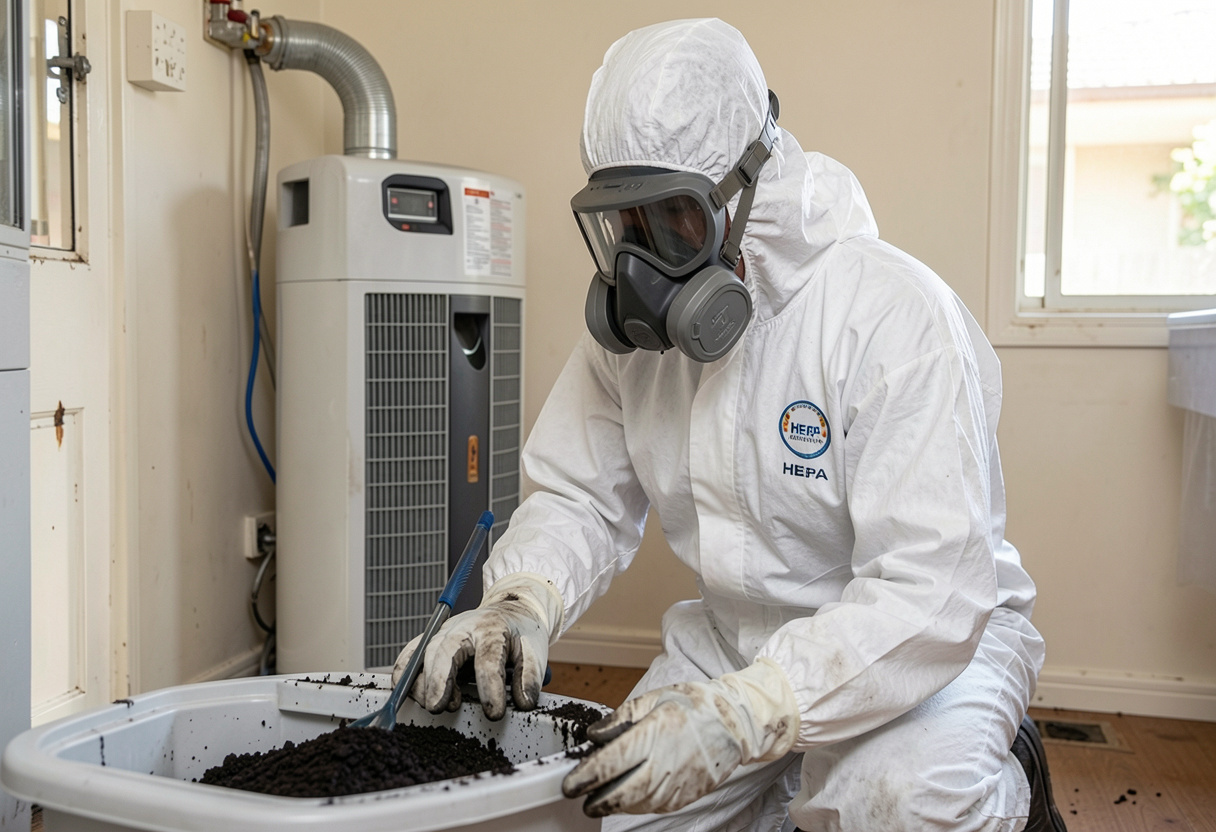
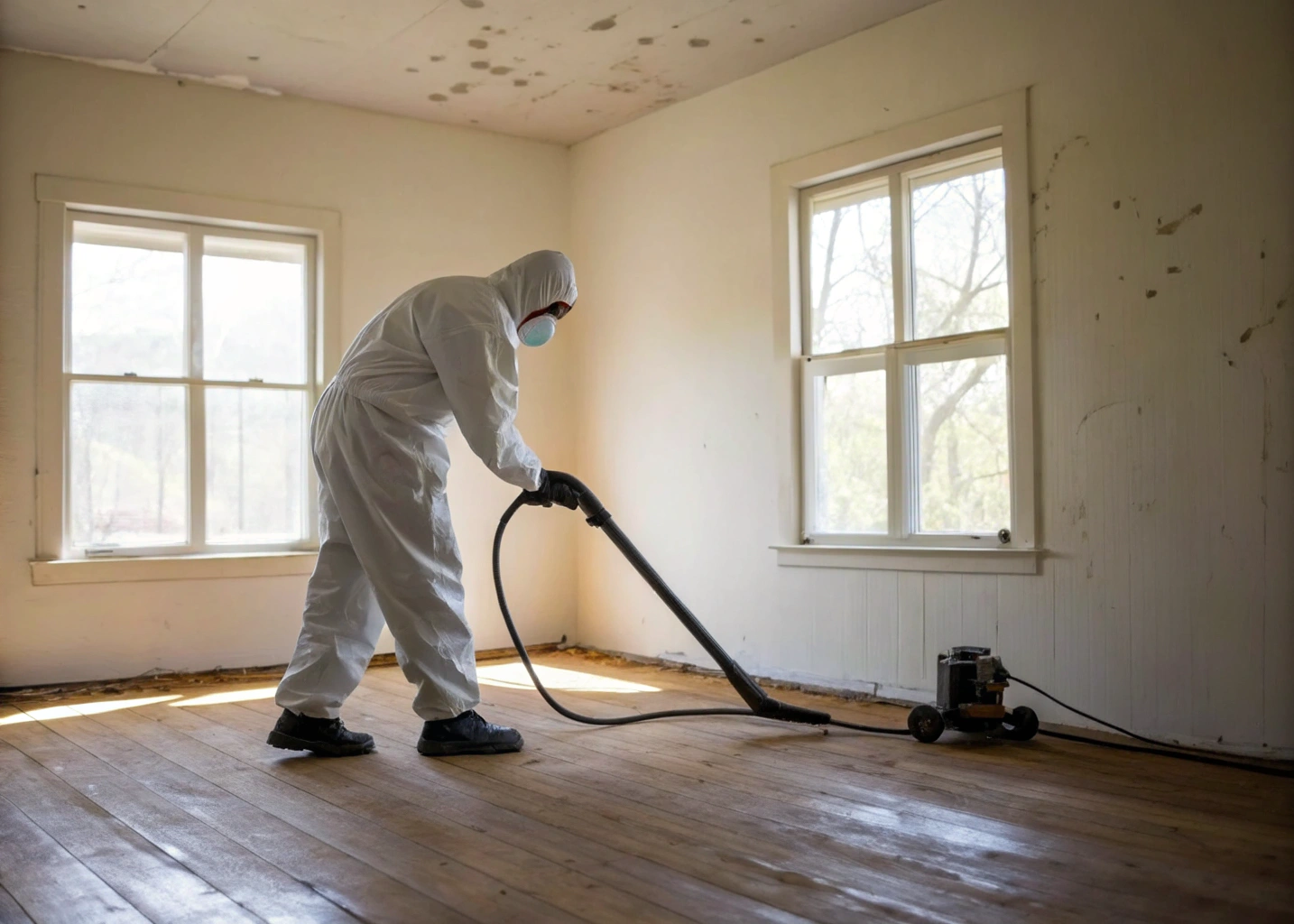
Once the assessment is complete, HEPA vacuuming of affected surfaces captures loose spores before any wet treatment disturbs them. This step is skipped entirely by domestic cleaners and DIY attempts — and it makes a significant difference to the airborne spore load during and after the clean. Wet treatment follows using professional-grade cleaning agents formulated for the specific surface type and mould species present, applied at concentrations and dwell times that deliver genuine biocidal efficacy. The process closes with post-clean antimicrobial treatment — a residual protective layer applied to cleaned surfaces to inhibit spore recolonisation after the job is complete.
HEPA Vacuuming and Surface Prep — The Step Most Cleaners Skip
HEPA vacuuming is the single most important step that separates professional mould cleaning from a domestic wipe-down — and it happens before any liquid product touches the surface. When mould is disturbed by a cloth or spray without prior vacuuming, loose spores become airborne and redistribute across the room, settling on previously unaffected surfaces and increasing the occupant’s exposure during the very process meant to reduce it.
A HEPA-rated vacuum captures spores at a filtration level that standard vacuum cleaners cannot match, removing the loose surface contamination from affected areas before wet treatment begins. This dramatically reduces the airborne spore load generated during cleaning and protects the integrity of surrounding surfaces throughout the process.
Surface preparation also includes identifying the boundaries of the affected area — because mould growth frequently extends beyond what is visible to the eye, particularly on porous surfaces like grout, silicone, and ceiling plasterboard. Mapping the full extent of contamination before treatment begins produces a more complete result and reduces the likelihood of leaving active growth at the margins of the cleaned area.
Post-Clean Antimicrobial Treatment and Residual Protection
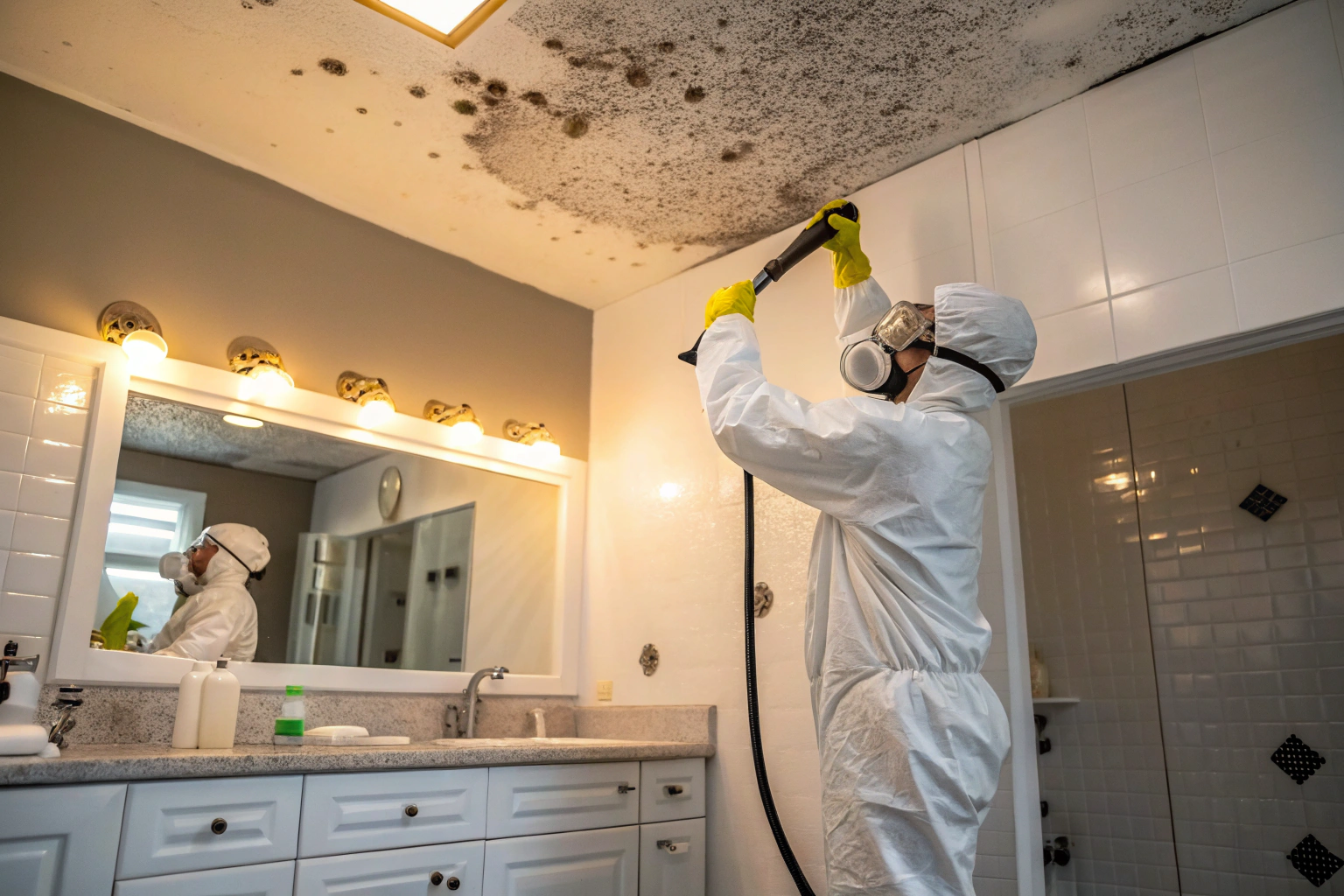
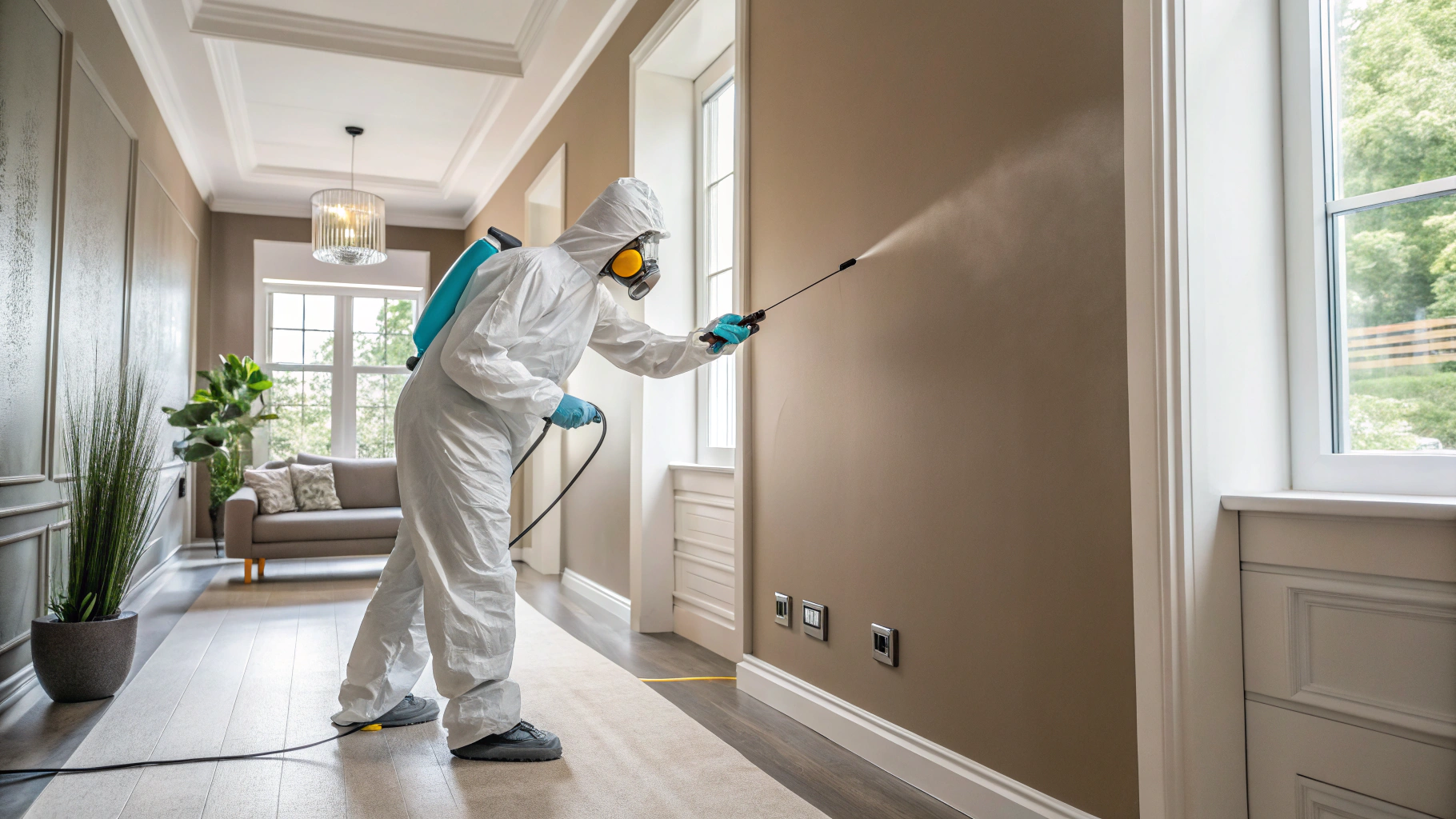
Post-clean antimicrobial treatment is the step that converts a professional mould clean from a one-time result into lasting protection. Once affected surfaces have been HEPA vacuumed and treated with professional-grade cleaning agents, an antimicrobial surface treatment is applied across all cleaned areas — creating a residual protective layer that actively inhibits spore recolonisation for an extended period after the technician has left the property.
This step is absent from every DIY mould cleaning attempt and from the work of unqualified domestic cleaners. Consumer spray products deliver no residual biocidal protection — once the active ingredient dissipates, the surface is as vulnerable to recolonisation as it was before treatment. On the Central Coast, where ambient humidity remains elevated for much of the year, that window of vulnerability is short and mould reestablishes quickly on untreated surfaces.
The antimicrobial treatments applied in professional mould cleaning are formulated for compatibility with specific surface types — tiles, painted plasterboard, timber, silicone, and grout each require a product matched to the material to deliver protection without causing surface damage or discolouration.
Containment and Safety Protocols During Professional Mould Cleaning
Containment and safety protocols during professional mould cleaning exist for one reason — to prevent the cleaning process itself from worsening the indoor environment of the property. Disturbing mould growth without appropriate containment releases spores into the air of the property, redistributing contamination to previously unaffected surfaces and elevating occupant exposure during and after the clean.
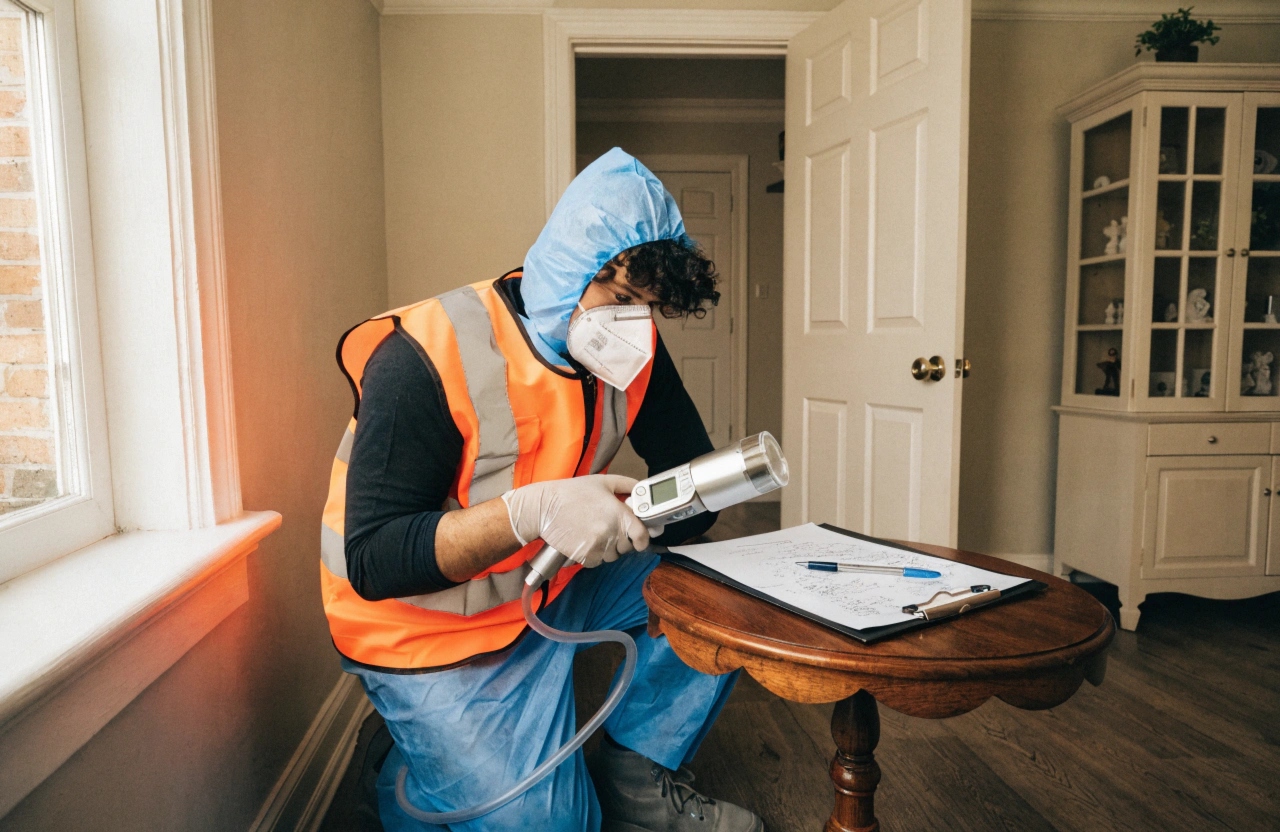
Professional mould cleaning applies a structured set of protocols before wet treatment begins. Work area containment is established where significant mould coverage is present, isolating the affected zone from the rest of the property during the clean. HEPA vacuuming precedes all wet treatment to capture loose spores before disturbance. Technicians work in appropriate personal protective equipment, including respirators, disposable coveralls, and nitrile gloves — protecting both the occupant environment and the technician throughout the process.
Where the scope of the clean warrants it, post-clean air quality assessment confirms that the indoor spore load has returned to acceptable levels before the property is reoccupied. On the Central Coast, where properties are frequently occupied throughout the cleaning process by families with children or elderly residents, these protocols are not optional extras — they are the standard that professional mould cleaning is built around.
Mould Cleaning vs Mould Remediation — How to Know Which One You Need
| Mould Cleaning | Mould Remediation |
|---|---|
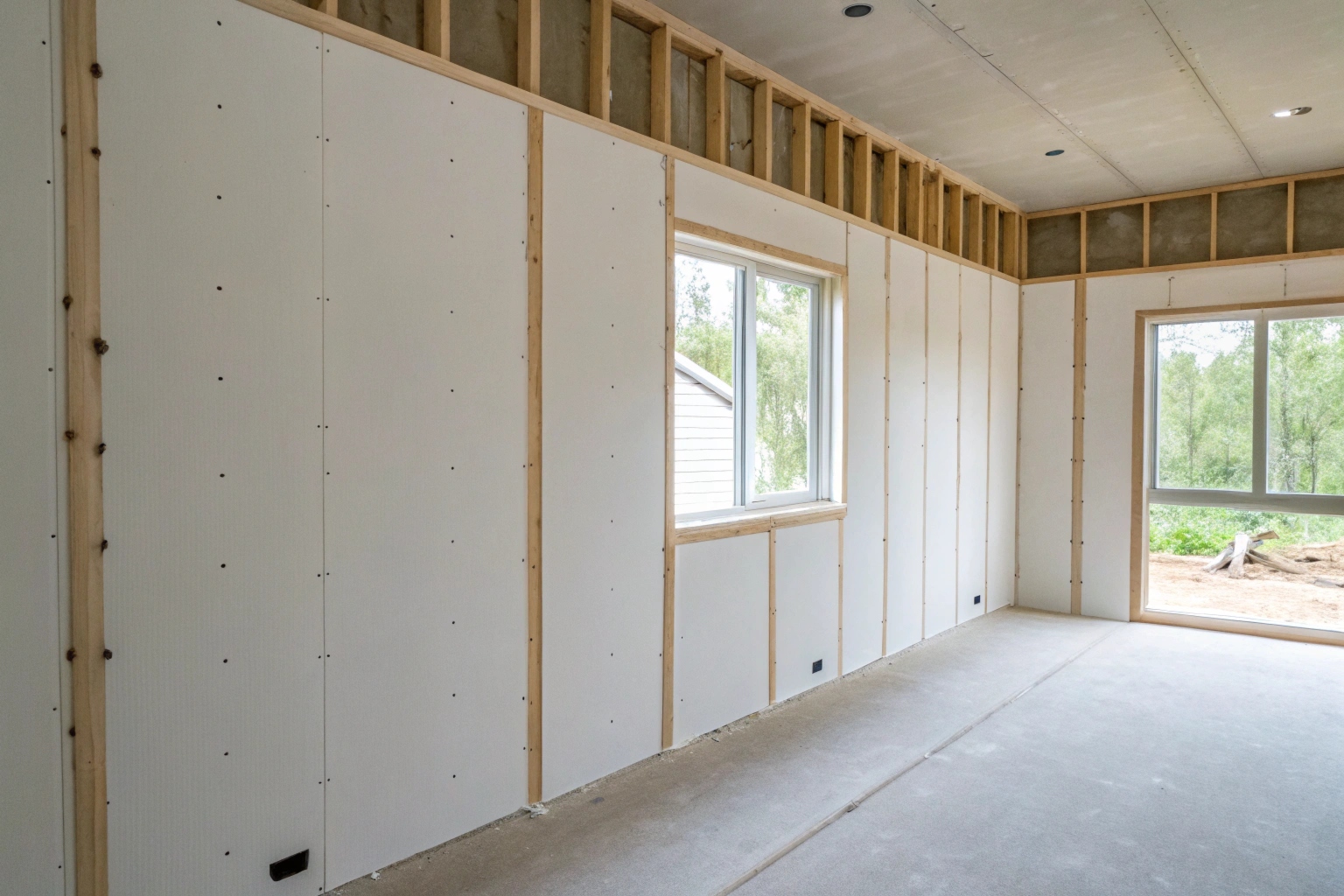
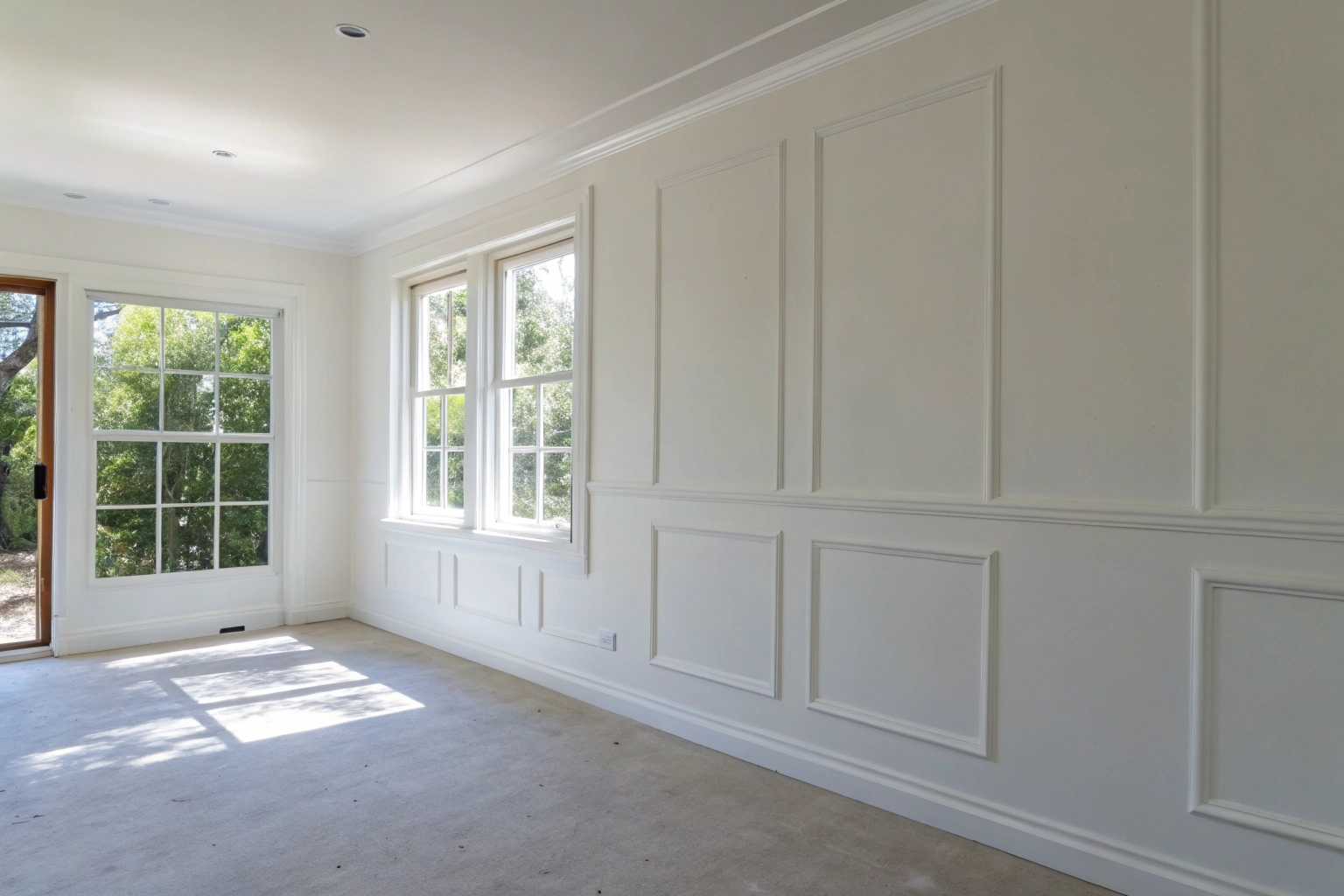
| Surface mould on hard, non-porous materials covering a limited area is typically a mould cleaning scope. Tiles, painted walls, sealed timber, and bathroom fixtures where mould has not penetrated below the surface layer can be professionally cleaned, treated, and protected without the need for structural intervention or material removal. A post-clean antimicrobial treatment and moisture management review complete the process. | Mould that has penetrated plasterboard, insulation, or structural timber requires remediation rather than cleaning. Where mould coverage extends across a large area or multiple surfaces, or where a strong musty odour suggests concealed growth inside wall cavities, ceiling voids, or subfloor spaces, a mould remediation assessment is the appropriate starting point rather than a surface clean. |
Seasonal Mould Patterns on the Central Coast and When to Act
The Central Coast experiences mould pressure year-round — but the triggers shift with the seasons, and knowing when conditions are most favourable for mould growth helps property owners act before a minor surface problem becomes a significant one.
Summer brings high humidity, concentrated rainfall events, and warm temperatures that accelerate mould growth on both interior and exterior surfaces. Properties in low-lying suburbs around Tuggerah Lakes, Brisbane Water, and Lake Munmorah face additional risk from water ingress and subfloor dampness following heavy rain events.
Winter on the Central Coast produces persistent condensation on single-glazed windows, cold wall surfaces, and poorly ventilated bathrooms — creating the prolonged surface moisture that mould requires to establish. Ceiling plasterboard and external-facing walls are the most commonly affected surfaces during the cooler months.
Spring is the peak period for mould cleaning enquiries across the region, as homeowners discover what winter condensation has left behind. Acting at the first sign of surface growth — rather than waiting for it to spread — produces the best cleaning outcomes and the most cost-effective result.
Mould Cleaning FAQs for Central Coast Homeowners and Tenants
Yes. Professional mould cleaning uses biocidal agents at concentrations and dwell times that consumer products cannot match, combined with HEPA vacuuming and post-clean antimicrobial treatment — delivering results that supermarket sprays are not formulated to produce.
With post-clean antimicrobial treatment applied and the underlying moisture source addressed, professionally cleaned surfaces resist recolonisation significantly longer than DIY-treated surfaces. Results vary based on the property’s humidity levels and ventilation conditions.
Every professional clean includes a pre-clean moisture assessment and a post-clean moisture management review. Identified moisture sources are documented with corrective action recommendations provided to the property owner or manager as part of the clean.
Hard, non-porous surfaces including tiles, painted walls, sealed timber, and bathroom fixtures respond well to professional mould cleaning. Heavily porous or structurally compromised materials may require remediation assessment rather than surface cleaning alone.
Plasterboard, insulation, and structural timber where mould has penetrated below the surface layer cannot be restored through cleaning. These materials typically require removal and replacement as part of a mould remediation scope.
Ready to Book a Professional Mould Clean on the Central Coast?
Visible mould on your walls, ceiling, or bathroom surfaces is not a problem that improves with time. The longer active mould growth sits on a surface, the deeper it penetrates — and the harder it becomes to clean effectively without escalating to a full remediation scope.
Our professional mould cleaning service covers homeowners, tenants, property managers, and commercial clients across the Central Coast — from Gosford and Terrigal to Wyong, Woy Woy, The Entrance, and everywhere in between. Every clean includes a pre-clean assessment, HEPA vacuuming, professional-grade treatment, post-clean antimicrobial protection, and full written documentation.
Call us today to book your mould cleaning assessment or request a quote. Fast response, professional results, and documentation you can use — that is what every Central Coast mould clean we carry out delivers.
