
Why Plasterboard Needs Replacing — Not Just Treating
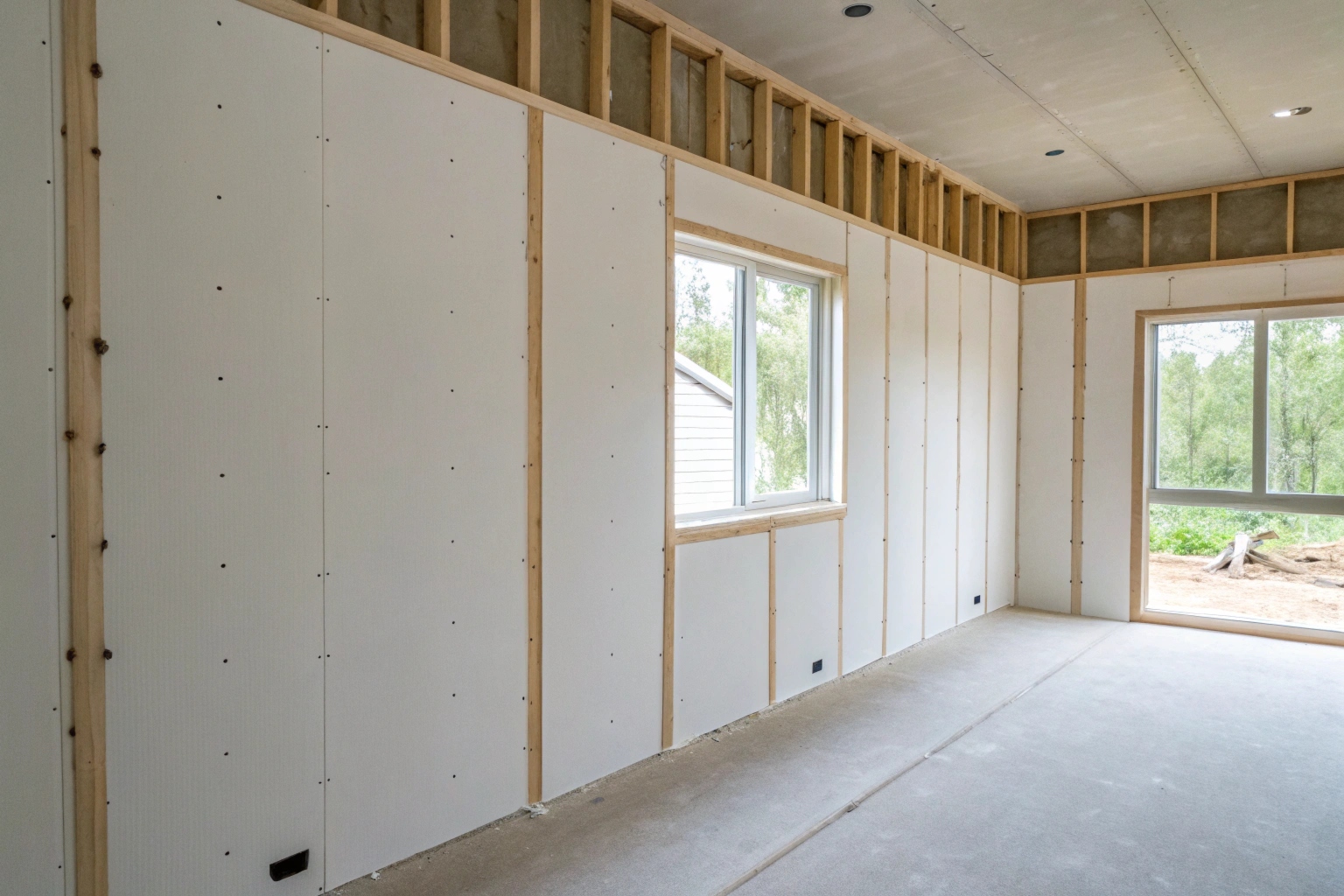
Understanding why replacement is necessary rather than surface treatment helps property owners make informed decisions — and avoid paying twice for a problem that wasn’t properly resolved the first time.
Mould begins on the surface of plasterboard. The paper face provides an organic substrate that mould spores colonise readily when moisture is present. In the early stages, surface cleaning with appropriate antimicrobial products can be an appropriate response. But with sustained moisture exposure, mould grows through the paper face and establishes itself within the gypsum core — a porous, calcium-based material that absorbs and holds contamination well below the surface layer.
The tell-tale sign that penetration has occurred is grey or black discolouration that returns rapidly after surface cleaning, or that fails to respond to treatment at all. At this point, the contamination is embedded within the material itself. Surface sprays, antimicrobial washes, and paint-over approaches do not resolve embedded mould growth — they mask it temporarily while the underlying contamination continues to affect indoor air quality and material integrity.
This is the threshold at which replacement becomes the only professionally appropriate recommendation. We carry out a thorough assessment of affected plasterboard before any scope of works is confirmed, so property owners receive an honest, accurate picture of what needs replacing and what can be retained.

Plasterboard Replacement Scenarios We Handle on the Central Coast
Mould-affected plasterboard presents differently depending on where the moisture entered and how long it was present. These are the most common replacement scenarios we work through across Central Coast properties.
Installation & Finishing — Restoring to a Clean, Completed Standard
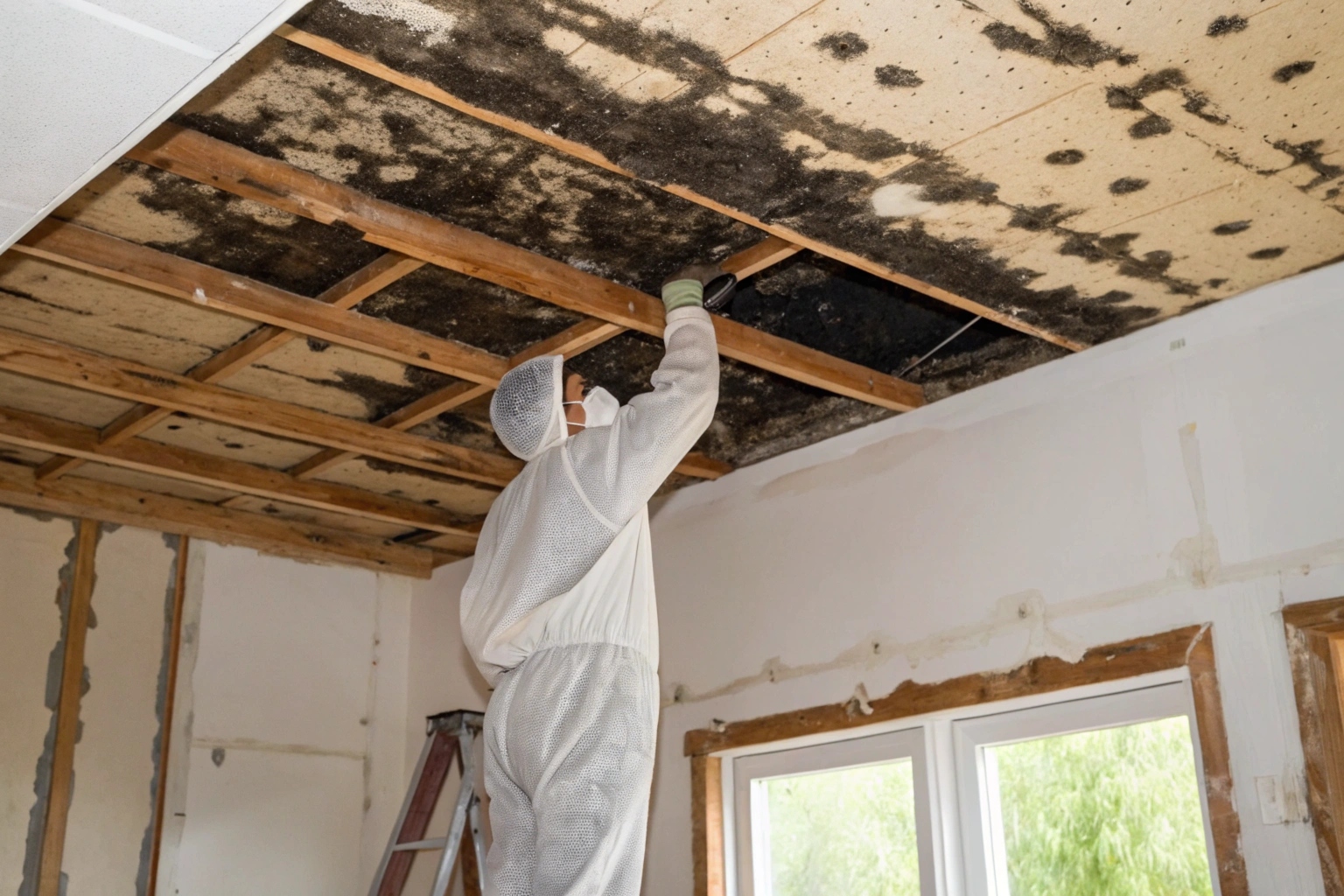
The quality of a plasterboard replacement is determined as much by the finishing process as by the installation itself. A replacement sheet fixed to framing but poorly set and painted will be visible for the life of the property. Our process delivers a result that is indistinguishable from the original construction.
Fixing & Sheet Positioning
New plasterboard sheets are fixed to existing framing using appropriate fixings at correct spacing. Sheet joints are positioned at framing members wherever possible — a fundamental installation principle that prevents cracking along joint lines and delivers long-term stability in the finished surface.
Setting & Sanding
Joints and fixing heads are set with two to three coats of joint compound, feathered progressively wider with each coat to achieve a smooth, flat transition across the surface. Each coat is allowed to cure fully before the next is applied. The completed set is sanded to a paintable finish that requires no additional filling or spot treatment.
Corner Profiles & Beads
Internal corners are finished with paper tape, external corners with metal or plastic bead profiles appropriate to the location and finish specification.
Mould-Inhibiting Primer — Non-Negotiable in This Context
Before any decorative paint is applied, the replacement surface receives a coat of mould-inhibiting primer. This step is non-negotiable in a post-mould restoration context and is not standard practice in general painting work. It forms a treated barrier between the new substrate and the decorative finish.
Paint matching to adjacent surfaces is carried out to achieve a seamless visual result across the completed area.
Choosing the Right Plasterboard for a Post-Mould Replacement
Material selection in a post-mould replacement context is not a one-size-fits-all decision. The correct product depends on the location, the moisture profile of the space, and the compliance requirements of the original installation.
| Material | Appropriate Application |
| Standard plasterboard (10mm / 13mm) | Dry, well-ventilated areas where the moisture source has been fully resolved |
| Moisture-resistant plasterboard | Bathrooms, laundries, kitchens, and other areas with ongoing humidity exposure |
| Fire-rated plasterboard | Any wall or ceiling where the original installation required fire separation performance |
| Fibre cement sheeting | Tiled wet area walls requiring superior moisture resistance — current best practice standard for Central Coast wet area substrates |
Moisture-resistant plasterboard — identifiable by its blue or green face paper — is available in standard 10mm and 13mm thicknesses and is the appropriate replacement product for any area subject to regular humidity, condensation, or incidental water contact.
Fire-rated plasterboard is a compliance consideration that is frequently overlooked in repair and restoration work. Where the original installation served a fire separation function — between a garage and a living space, for example, or in a multi-unit building — the replacement material must meet the same performance specification.
Fibre cement sheeting provides superior moisture resistance compared to any plasterboard product and is the current best practice substrate for tiled wet areas across Central Coast residential construction.
Plasterboard Replacement & Insurance Claims on the Central Coast
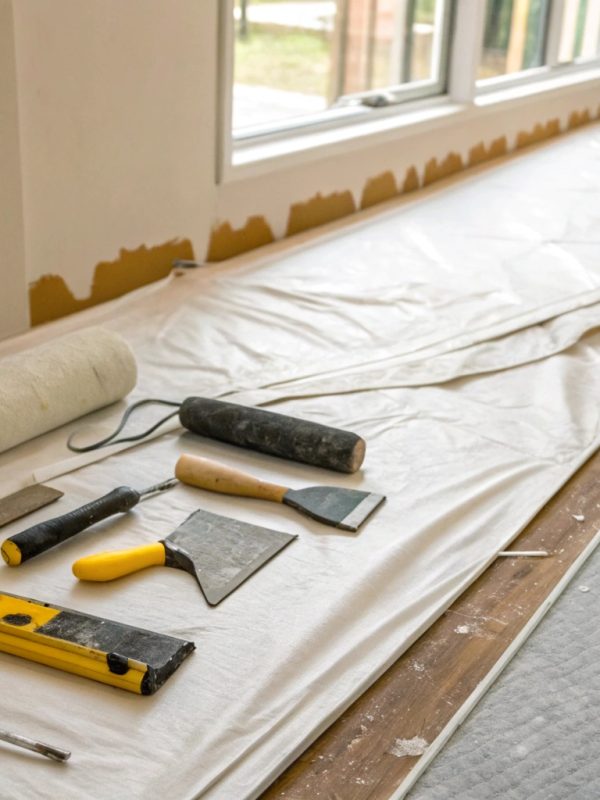
Where mould damage has resulted from a claimable water damage event — a burst pipe, storm-driven roof leak, or sudden water ingress — plasterboard replacement costs are typically covered under the building insurance claim as part of the reinstatement scope. Understanding how to position and document a replacement scope correctly within an insurance claim process is something many property owners find unexpectedly complex.
Insurers and loss adjusters require scopes of works, material quantities, and cost estimates presented in a specific format before replacement works can be approved and funded. Poorly documented claims, vague scopes, or estimates that don’t align with insurer expectations can delay approvals significantly — extending the period during which a property remains uninhabitable or a rental sits vacant.
We prepare plasterboard replacement scopes and cost estimates in the format required by insurers and loss adjusters, and we carry out replacement works within approved claim budgets and timelines. Our documentation covers:
• Affected area measurements and sheet quantities
• Material specification including product type and thickness
• Removal, disposal, and installation labour
• Setting, priming, and paint finishing
• Any associated works required to access or reinstate the affected area
For property owners navigating an active insurance claim, having a single contractor who can prepare the scope, carry out the works, and provide completion documentation significantly reduces the administrative burden and accelerates the path to a fully reinstated property.
For Landlords & Property Managers — Minimising Vacancy, Maximising Speed
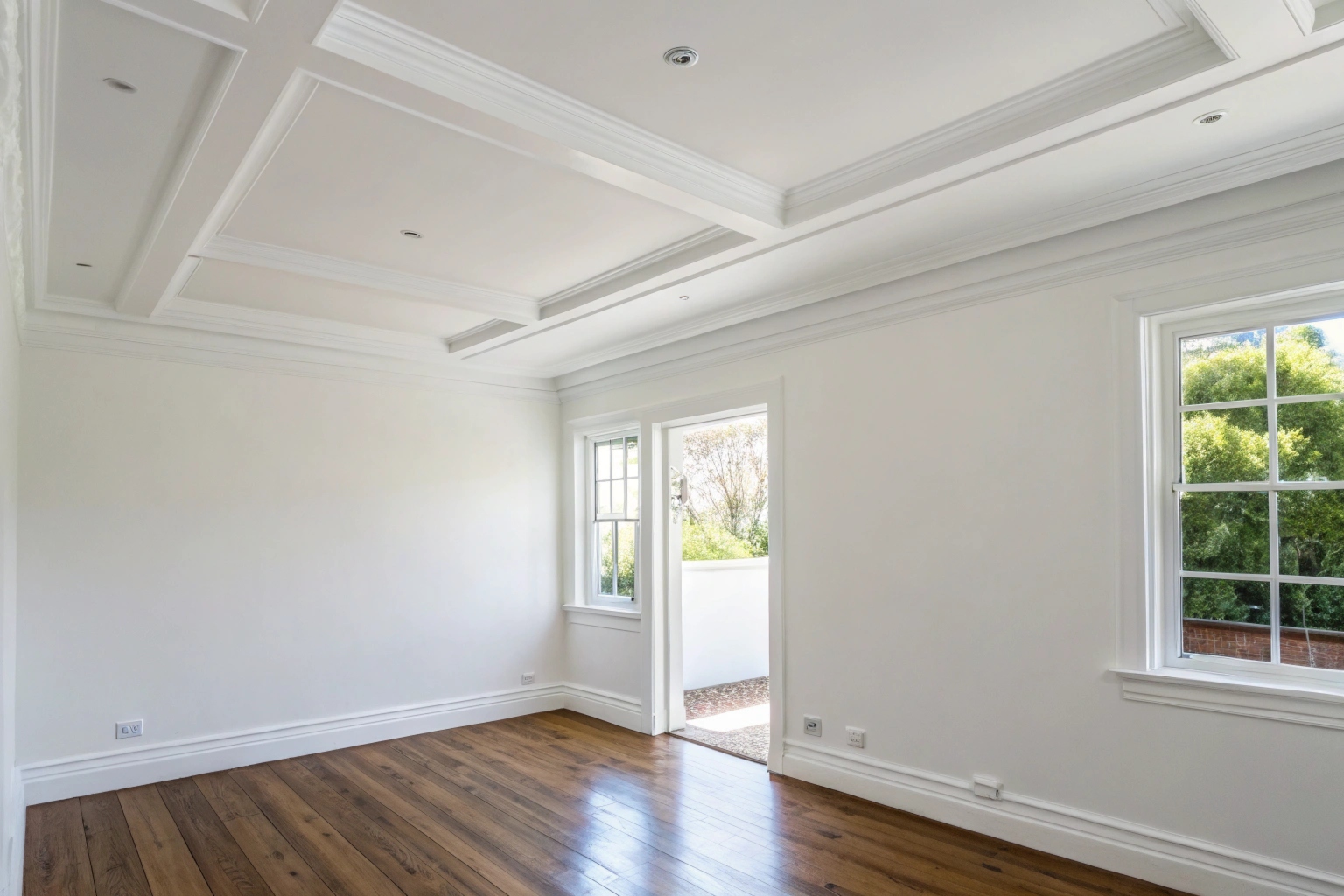
Plasterboard replacement in a rental property carries a pressure that owner-occupied work does not — every day the property sits untenantable is a day of lost rental income. For landlords and property managers across the Central Coast, the priority is not just quality reinstatement but a coordinated, time-efficient process that supports the re-letting schedule without compromising the standard of the finished result.
We work directly with property managers and landlords to deliver plasterboard replacement under a single point of contact — coordinating the full scope from initial assessment through to final inspection without requiring the property manager to manage multiple trades or chase separate contractors for removal, plastering, painting, and sign-off.
Our process for rental property plasterboard replacement covers:
• Mould-affected sheet removal and safe disposal
• Replacement with appropriate material for the location and moisture profile
• Full setting, sanding, and corner finishing
• Mould-inhibiting primer application before decorative paint
• Paint finish matched to existing surfaces
• Written completion report suitable for property management records and tenancy documentation
For landlords managing NSW Fair Trading obligations around habitability and mould remediation, professional documentation of the reinstatement works — including material specifications and completion sign-off — provides a clear record that the property has been restored to a safe, habitable standard. This documentation protects both the landlord’s position and the property manager’s file in the event of any future tenancy dispute.
Frequently Asked Questions — Plasterboard Replacement Central Coast
Replacement is required when mould has penetrated through the paper face into the gypsum core — identifiable by discolouration that returns rapidly after surface cleaning or fails to respond to antimicrobial treatment. Surface mould detected early can sometimes be treated in place, but once core penetration has occurred, replacement is the only outcome that delivers a genuinely clean result.
Moisture-resistant plasterboard significantly reduces the risk of future mould growth in humidity-exposed areas, but it is not a standalone solution. The underlying moisture source must be fully resolved before replacement — whether that means repairing a roof leak, rectifying failed waterproofing, or addressing rising damp. Moisture-resistant board installed over an unresolved moisture problem will still develop mould over time.
A standard bedroom or living area wall replacement typically takes one to three days from removal through to painted finish, allowing for setting coat cure times. Bathroom wet area replacements involving tile removal, waterproofing, and retiling require additional time depending on scope.
Where damage originates from a claimable water damage event, plasterboard replacement is typically included in the reinstatement scope. Policy conditions vary — we recommend confirming coverage with your insurer before works commence.
In NSW, plasterboard replacement that forms part of a structural or fire-rated assembly requires a licensed contractor. We hold the appropriate licensing for all replacement work we carry out.
Ready to Restore Your Walls & Ceilings to a Finished Standard?
Mould-damaged plasterboard is one of the most visible and disruptive outcomes of water damage on the Central Coast — but it is also one of the most straightforward to resolve when the replacement is carried out properly, with the right materials, the right finishing process, and a clear understanding of what a post-mould reinstatement actually requires.
We carry out plasterboard replacement across the full Central Coast region — from Gosford, Terrigal, and Avoca Beach in the south through to Wyong, The Entrance, Budgewoi, and Lake Munmorah in the north. Whether you are an owner-occupier working through insurance, a landlord managing a vacant rental, or a property manager coordinating a remediation and reinstatement scope, we deliver a complete, documented result under a single point of contact.
Our service covers removal, replacement, setting, priming with mould-inhibiting primer, paint finishing, and written completion documentation — everything required to take a mould-affected wall or ceiling from damaged substrate to finished, habitable surface.
Contact us today to arrange an assessment of your mould-damaged plasterboard and receive a clear scope of works and cost estimate prepared for your specific property and situation. We respond promptly to all Central Coast enquiries and can typically arrange an on-site assessment within a short timeframe to get your reinstatement moving.
