
Central Coast Mould Removal Experts You Can Rely On
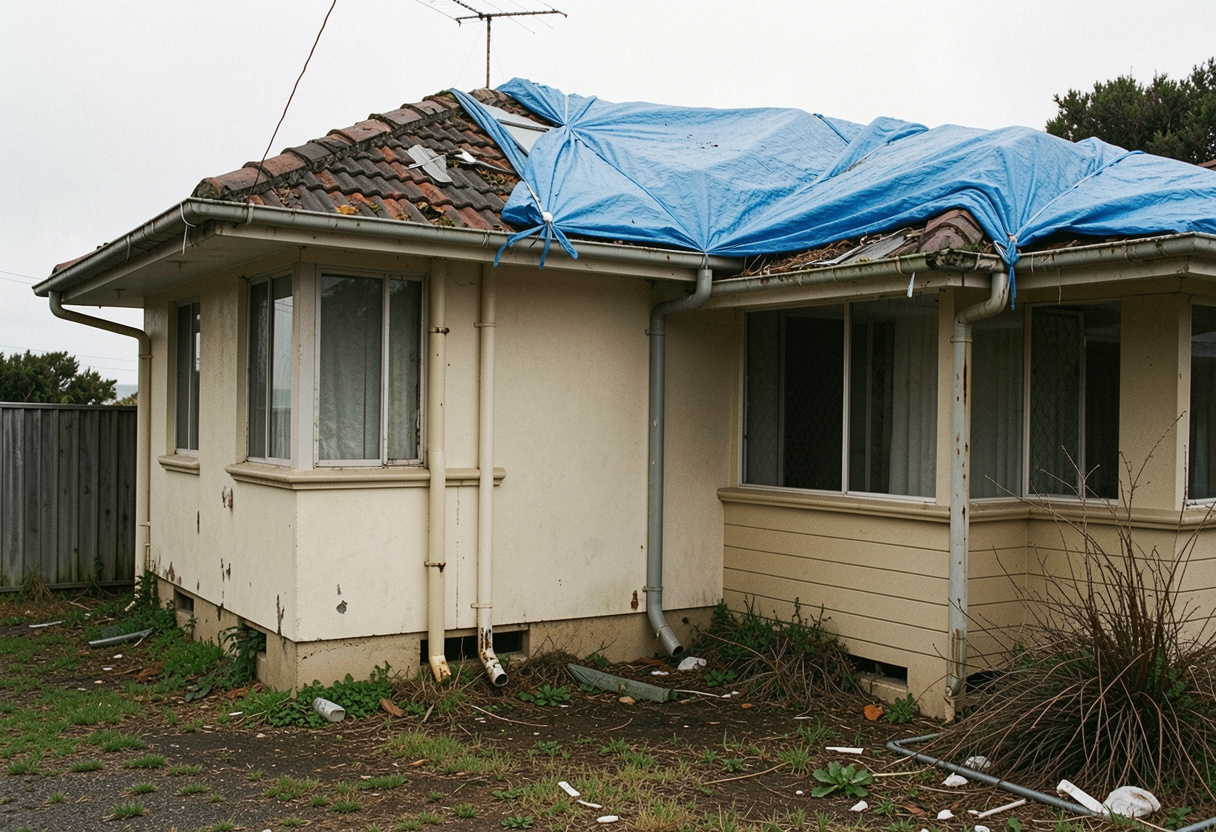
The Central Coast doesn’t mess around when a storm rolls in. East coast lows, severe thunderstorm cells, intense hail events — this region cops it hard and regularly, and when the wind drops and the rain stops, what’s left behind inside your walls, ceiling cavities, and subfloor can be a lot worse than what’s visible on the surface.
Storm damage restoration isn’t just about drying out a wet room. It’s about assessing every point where water got in, making the building safe, extracting the moisture from places you can’t see, and stopping mould before it takes hold. We work across the Central Coast responding to storm damage fast — because the gap between the storm clearing and secondary damage setting in is measured in hours, not days.
Working through all remaining sections now, one by one, maintaining tone and structure throughout.

What Storm Damage Restoration Actually Involves
The Mould Risk Profile of Storm Damage
Storm damage carries a specific and underappreciated mould risk that’s different from a burst pipe or an appliance leak. Here’s why.
Storm water intrusion frequently affects ceiling spaces and wall cavities — areas that are hard to access, slow to dry, and invisible from inside the property. The damage may not be immediately obvious. There’s no puddle on the floor, no stain on the ceiling — just moisture sitting in concealed spaces, and the clock running.
By the time internal staining appears, the plasterboard starts to sag, or visible mould growth shows up on a wall surface, the hidden moisture has typically been present long enough that mould colonisation is already underway behind the scenes. That’s the delayed-recognition dynamic that makes storm damage genuinely dangerous from a mould perspective — and it’s why a professional moisture assessment after any significant storm event matters even when internal damage looks minimal.
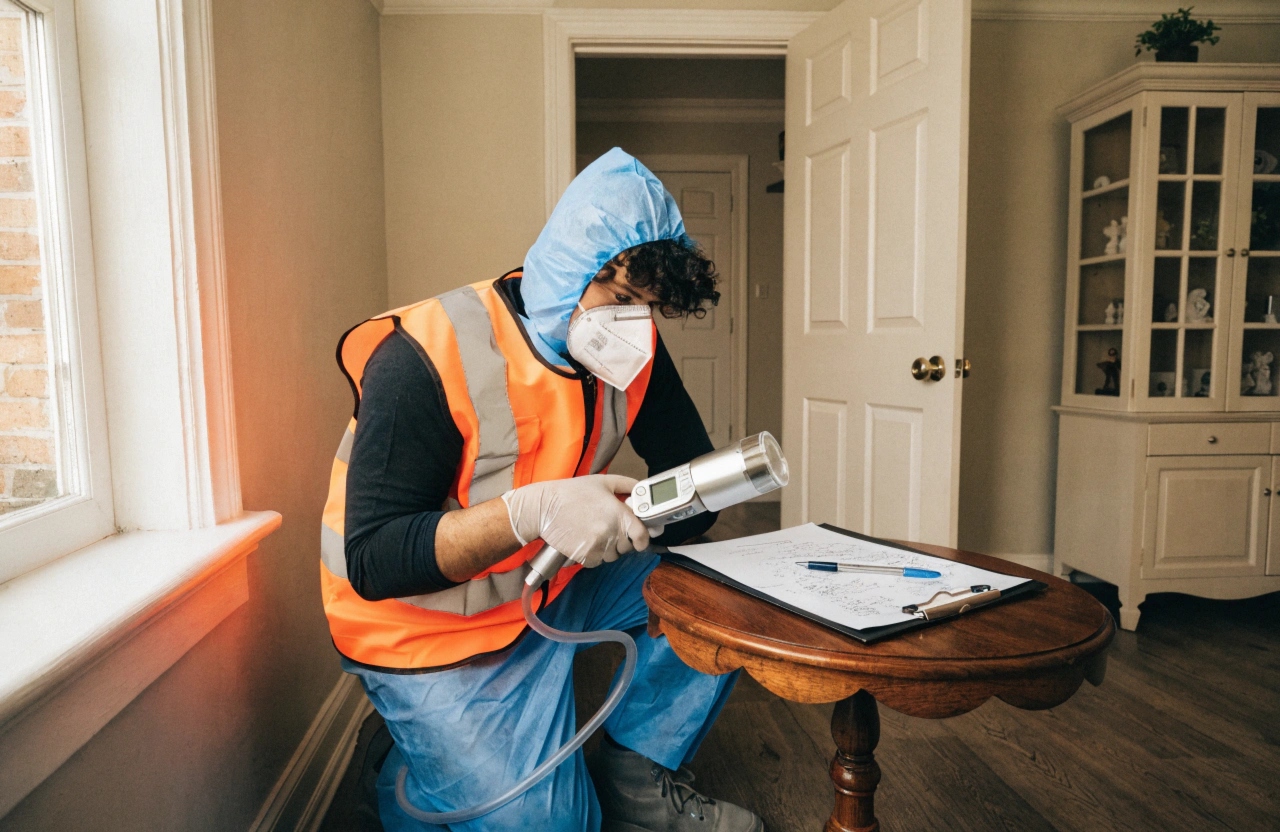
We use thermal imaging cameras and calibrated moisture meters to map moisture in wall cavities, ceiling spaces, and subfloor areas that a visual inspection simply can’t reach. That diagnostic capability isn’t a sales step — it’s the difference between finding the problem and missing it until it becomes a remediation job.
Storm Damage Scenarios We See Most on the Central Coast
Lifted tiles, damaged metal roofing, and failed flashings are the most frequent storm damage presentation we attend. Emergency tarping and temporary roof repair is often the first action required — stopping ongoing intrusion before any internal restoration work can start.
During intense Central Coast rainfall events, gutters overflow fast. Water forces back against fascia and soffit, into wall cavities at eave level, and sometimes directly into ceiling spaces — creating concealed moisture damage that doesn’t show up internally for days.
Rain entering through a compromised roof saturates insulation and plasterboard from above. The ceiling may hold initially, then sag or stain days later — by which point the moisture has already been sitting in the cavity long enough for mould to establish.
Stormwater systems across low-lying Central Coast suburbs — Wyong, Umina Beach, South Gosford, Tuggerah — back up fast in heavy rain events, introducing contaminated water at ground level that requires extraction and sanitisation, not just drying.

The Health Risks of Living With Mould
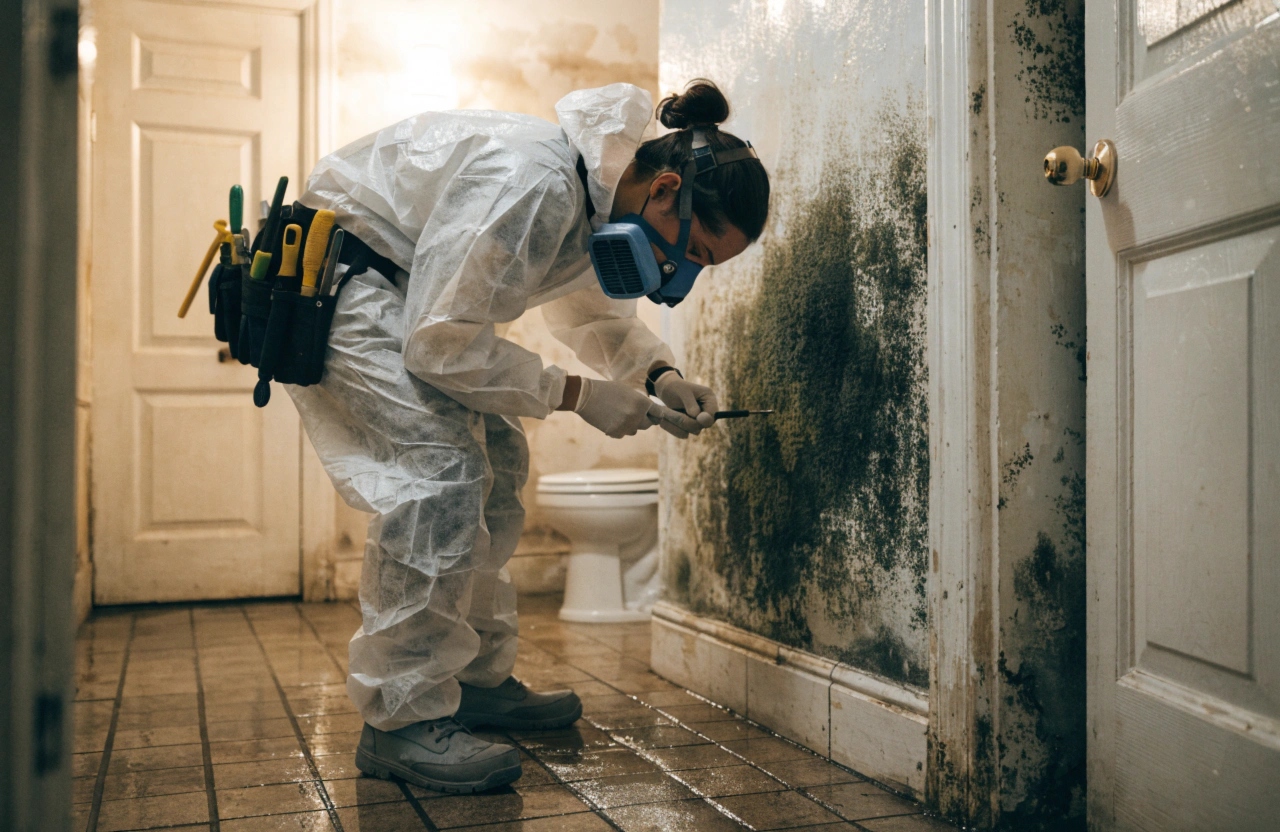
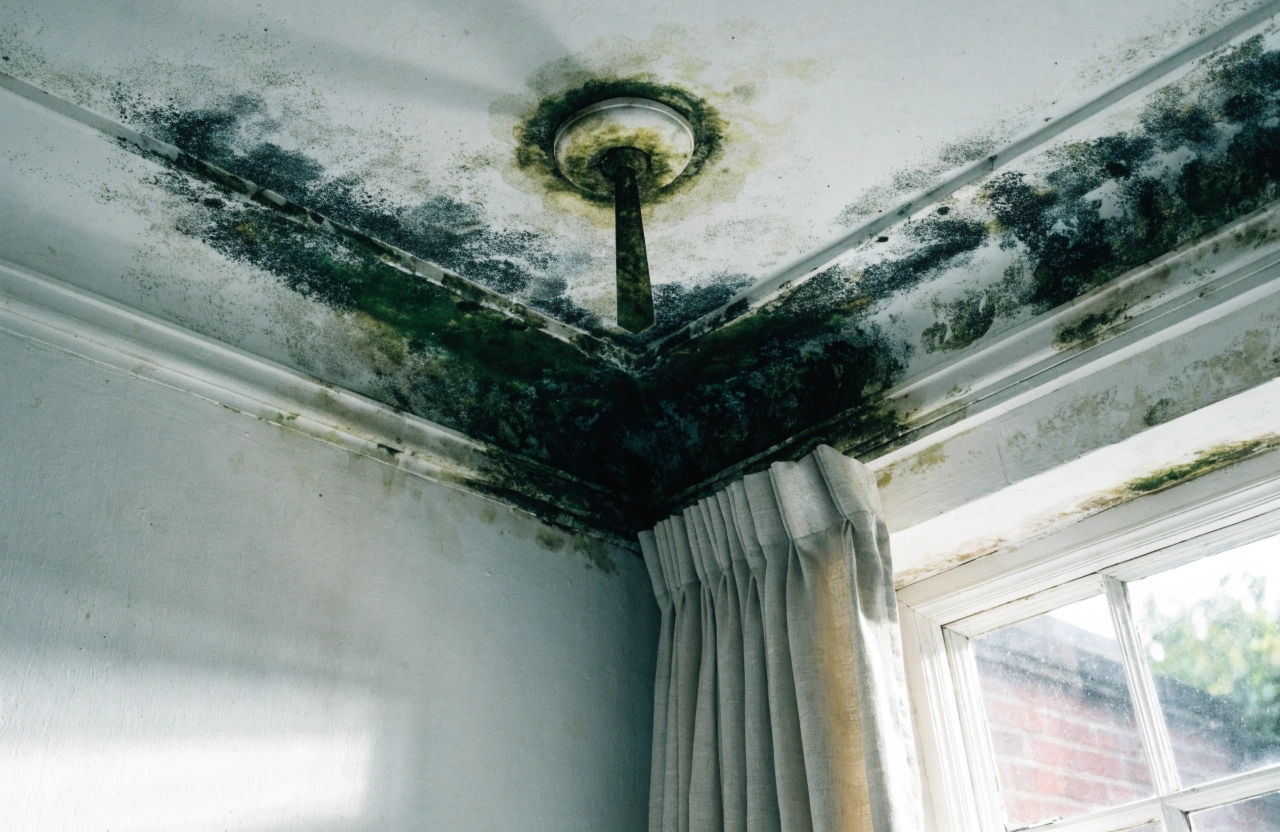
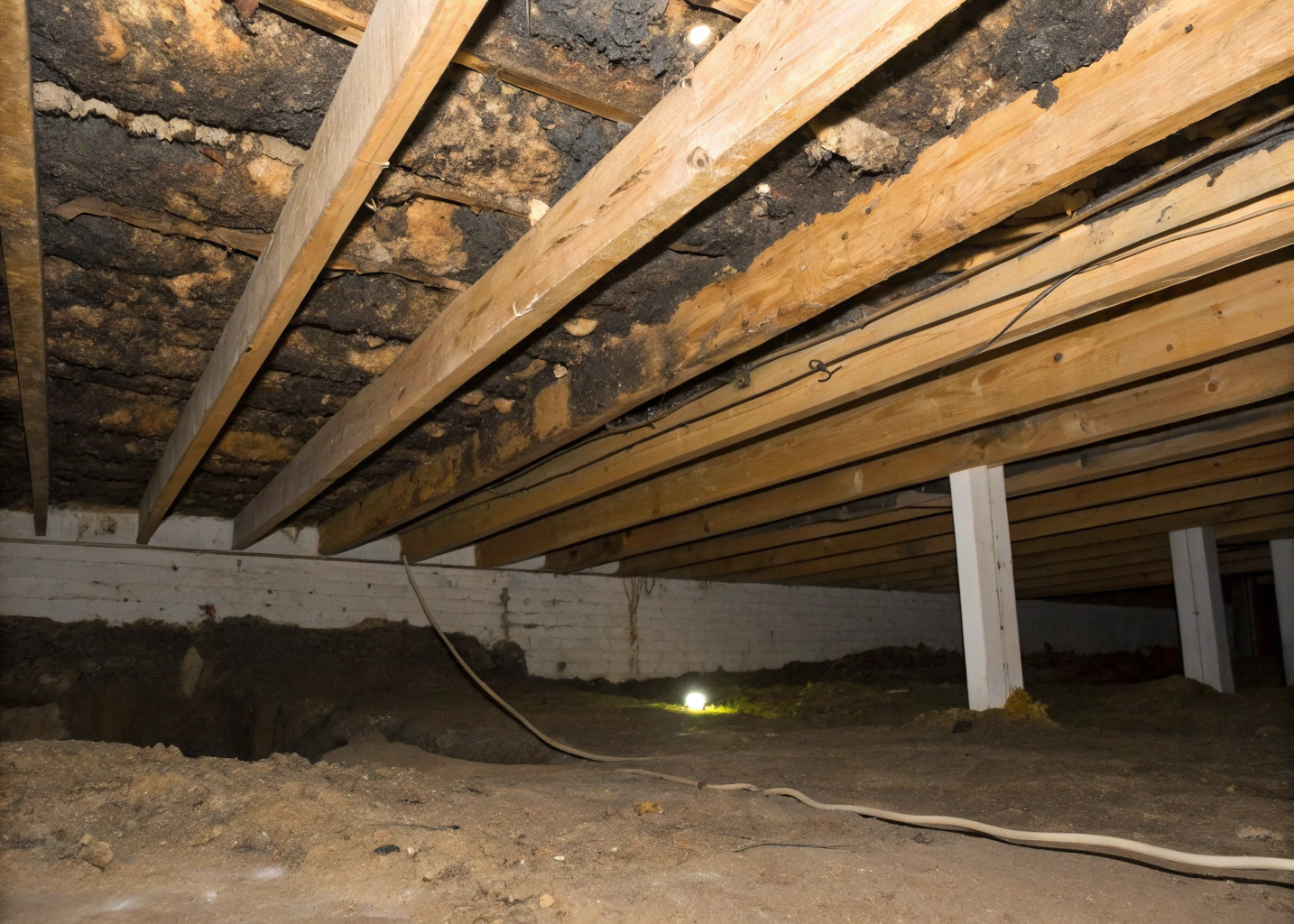
Mould isn’t just an eyesore on the ceiling — it affects the air everyone in the house is breathing. For a lot of people the first signs are easy to brush off: a runny nose that won’t shift, itchy eyes, a bit of a cough, sinus trouble that keeps hanging around. Living in a mouldy home can bring on respiratory irritation and allergic reactions, and for some people it triggers asthma or makes existing asthma worse.
Not everyone reacts the same way, though. Young kids, elderly residents, and anyone with a compromised immune system are far more sensitive to mould exposure, and the effects can be more serious for them. If you’ve got little ones at home or you’re caring for an older family member, this is the part that usually tips people from “I’ll get to it eventually” into picking up the phone.
The point isn’t to scare you. It’s just that mould is one of those problems where leaving it for another six months genuinely makes things worse — for your home and for the people in it. Getting it dealt with properly takes that worry off the table.
Why Prompt Response Prevents Compounding Damage
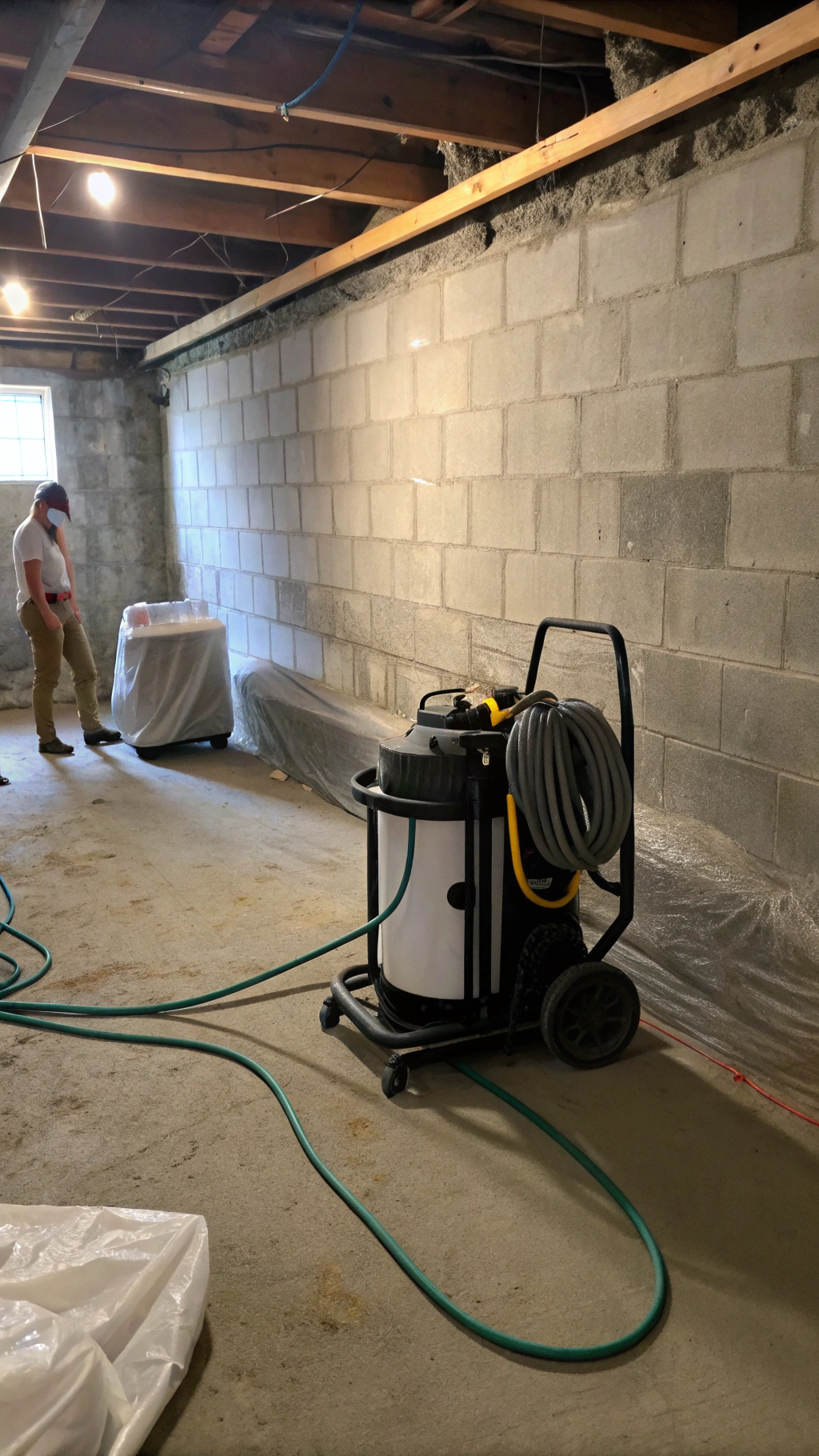
Unaddressed storm damage doesn’t stay at the level it starts. It compounds — and it compounds fast on the Central Coast, where the next rainfall event may be days away.
- Unrepaired roof damage allows water intrusion to saturate progressively more building fabric with every subsequent rainfall — insulation, plasterboard, and timber framing that was borderline after the first storm event becomes a full replacement job after the second
- Mould establishment in concealed cavities escalates from a preventable outcome to a full remediation requirement once colonisation has taken hold — a significantly more expensive and disruptive process than prevention treatment applied during the drying phase
- Timber structural elements exposed to sustained moisture begin to decay, compromising structural integrity in framing, flooring, and roof structures in ways that are expensive to rectify
- Electrical systems compromised by water intrusion create ongoing safety hazards that compound liability exposure for homeowners, landlords, and owners corporations alike
The financial case for prompt professional response is straightforward — every day between the storm event and the start of professional restoration is a day of compounding secondary damage.
Storm Damage Restoration for Strata and Body Corporate Properties
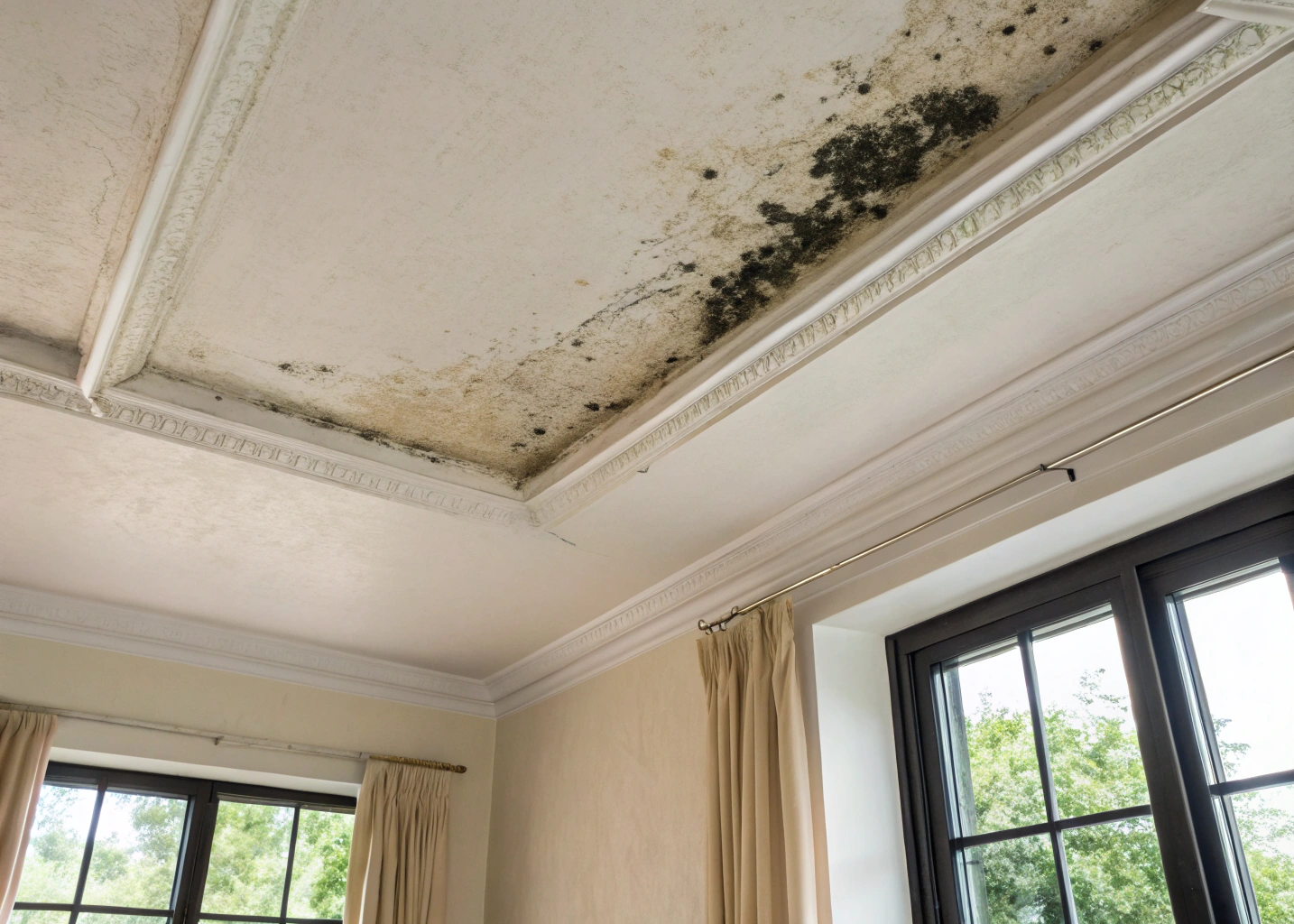
Storm damage hits strata properties differently. Roofing, guttering, external cladding, and common area structures are owners corporation responsibility — but the water intrusion from that damage affects individual lot owners immediately, and the strata governance process needs to move fast to protect them.
We’re experienced working within strata management frameworks on storm damage response across the Central Coast. That means we can provide the rapid on-site assessment and technical documentation that strata managers need to initiate insurance claims and approve emergency works without delay — while simultaneously protecting affected lot owners from ongoing water intrusion through emergency make-safe works.
If you manage strata properties on the Central Coast and need a restoration contractor who understands how to operate within that framework, we’re worth a conversation before the next storm season.
Our Storm Damage Restoration Process
1. Emergency Response and Safety Assessment We attend the property, assess all damage mechanisms, and identify any immediate safety hazards — electrical, structural, or biological — before any restoration work begins.
2. Emergency Make-Safe Works Where roof damage is creating ongoing water intrusion, we install temporary roof protection — tarping, temporary patching — to stop the entry point before internal drying can be effective.
3. Internal Damage Assessment and Moisture Mapping Thermal imaging cameras and calibrated moisture meters map the full extent of moisture penetration in walls, ceilings, subfloor spaces, and concealed cavities — establishing a baseline for the drying programme.
4. Water Extraction and Contaminated Material Removal Where standing water or saturated material is present — particularly where ground-level stormwater intrusion has occurred — extraction and removal of unsalvageable material is completed before drying equipment is placed.
5. Strategic Placement of Industrial Drying Equipment Commercial-grade dehumidifiers, air movers, and specialist drying equipment are positioned to address the specific moisture profile of the property — not a generic setup, but a layout based on the moisture mapping results.
6. Daily Moisture Monitoring and Drying Log Maintenance We monitor and record moisture readings daily, adjusting equipment placement as the drying programme progresses and maintaining the drying logs required for insurance claim support.
7. Antimicrobial and Mould Prevention Treatment Affected surfaces and at-risk concealed spaces receive antimicrobial treatment during the drying phase — preventing mould establishment rather than responding to it after the fact.
8. Final Moisture Clearance Testing On completion of the drying programme, final moisture readings are taken across all affected areas and compared against baseline readings to confirm clearance to acceptable levels.
9. Completion Report Full photographic and technical documentation of the restoration process — moisture mapping, drying logs, treatment records, and final clearance readings — provided as a completion report for insurance and records purposes.
10. Referral to Building Restoration Where structural reinstatement is required — plastering, roofing, flooring, painting — we refer to trusted building restoration trades to complete the property back to pre-loss condition.
Frequently Asked Questions About Storm Damage Restoration
Make it safe first — if there’s any risk of electrical hazard from water near powerpoints, switchboards, or ceiling lights, turn off the power at the mains and don’t re-enter until it’s been cleared. Document the damage with photos before touching anything, contact your insurer to lodge a claim, then call us. Don’t wait for the insurer to assess before starting restoration — most policies allow emergency make-safe and restoration works to proceed immediately, and delay increases secondary damage significantly.
Storm damage is one of the most clearly defined covered perils under standard Australian home building insurance policies. Emergency make-safe, professional drying, mould prevention treatment, and structural reinstatement are typically all claimable. The key is thorough documentation — we assist with that process from the initial response through to the completion report.
It depends on the extent of moisture penetration, the materials affected, and the ambient conditions — but a typical residential storm damage drying programme on the Central Coast runs between five and ten days under active drying conditions. Ceiling cavity saturation and wall cavity intrusion take longer than surface-level water damage due to the restricted airflow in concealed spaces.
Not always — but the risk is high enough that it should always be treated as a real possibility rather than a maybe. The Central Coast’s warm, humid conditions create an environment where mould can establish in wet building materials within 24 to 48 hours of a storm event. Ceiling cavities and wall spaces that retain moisture without active drying are particularly high-risk. Professional drying combined with antimicrobial treatment during the drying phase prevents the vast majority of post-storm mould outcomes.
Storm damage restoration addresses property damage caused by a storm event itself — wind damage to the building envelope, rain intrusion through a compromised roof or windows, and localised stormwater overflow from overwhelmed drainage systems. Flood damage restoration deals with inundation from rising water bodies — rivers, lakes, or tidal surge — which typically involves larger volumes of contaminated water, more extensive structural saturation, and a more complex remediation process. The two can overlap after severe events, but they’re distinct service categories with different assessment approaches, drying protocols, and insurance claim pathways.
