
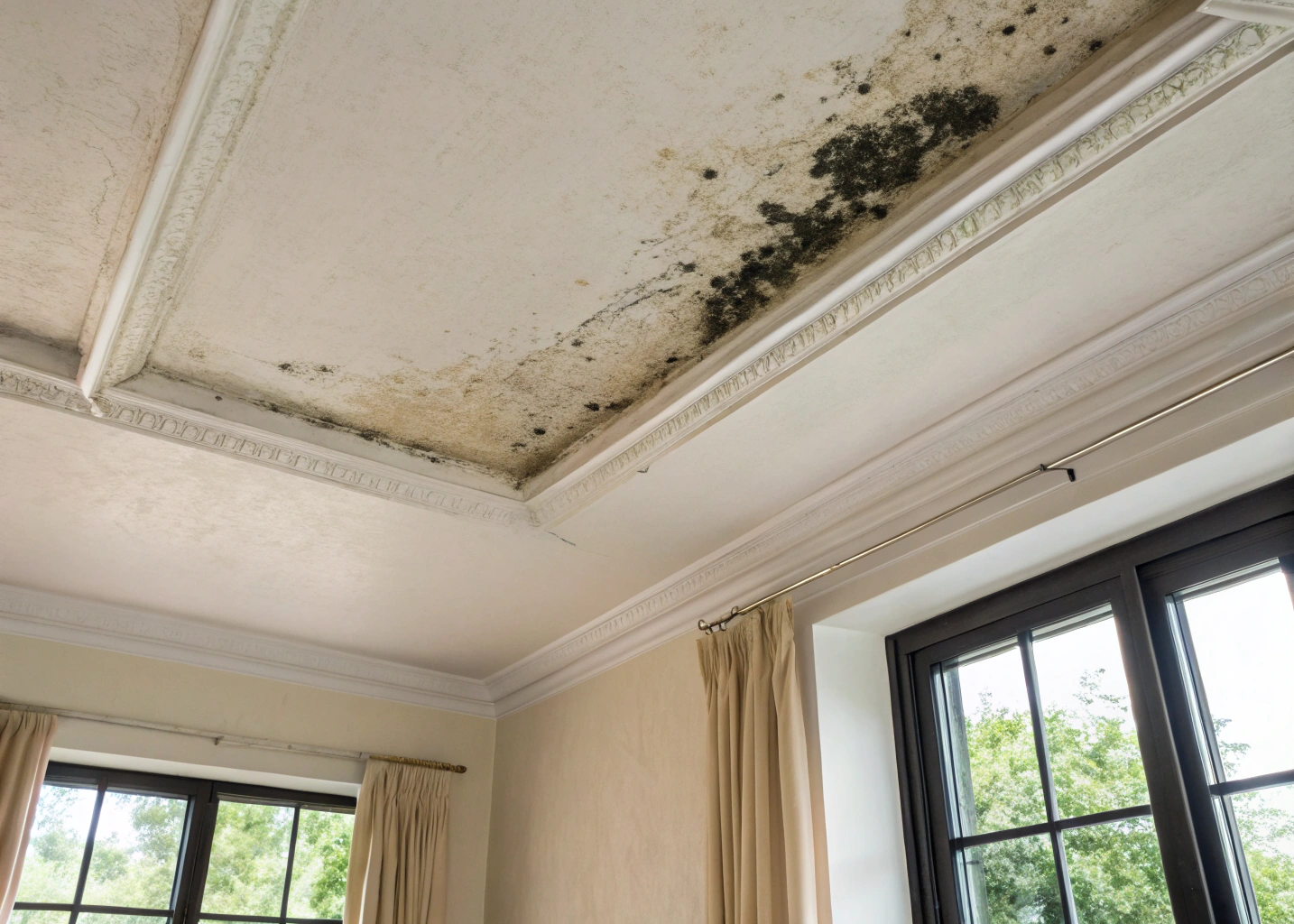
What Causes Mould on Ceilings?
Ceiling mould forms when excess moisture builds up on ceiling surfaces and can’t dry out. On the Central Coast, coastal humidity accelerates this process year-round. The most common causes include:
- Condensation — Warm, moist air rises and contacts a cooler ceiling surface, depositing moisture over time. Most common in bedrooms and living areas with inadequate insulation or limited airflow
- Roof leaks — Water getting in through damaged roofing, blocked gutters, or deteriorated flashing creates hidden moisture that feeds mould growth — often before any visible staining appears inside
- Bathroom and laundry steam — Without adequate exhaust ventilation, steam saturates ceiling surfaces daily, making wet area ceilings the most frequently affected in residential properties
- High indoor humidity — Humidity consistently above 60% — common in Central Coast homes during summer — allows mould to establish across ceiling surfaces even without a direct water source
Identifying the moisture source is the first step. Surface treatment without addressing the underlying cause will not produce a lasting result.

Why Ceiling Mould Is So Common in Central Coast Homes
Central Coast homes face a combination of conditions that make ceiling mould a recurring problem.

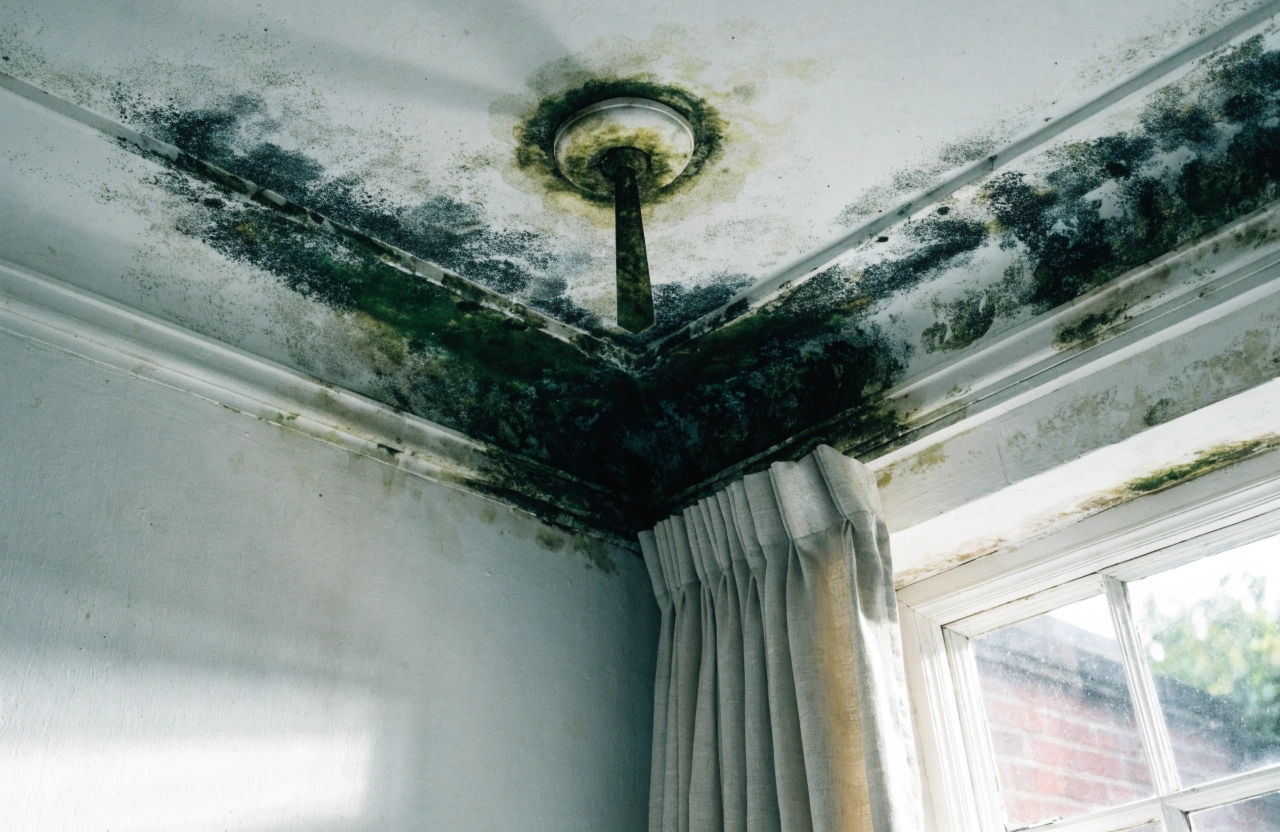
Why Ceiling Mould Keeps Coming Back After Cleaning
If you’ve wiped it back with bleach, tried a retail spray, or painted over it — and watched it return to the same spot a few months later — you’re not alone. It’s one of the most common things we hear from Central Coast homeowners.
Retail products and bleach treat what’s on the surface. But mould on plasterboard isn’t just sitting on top — it sends structures down into the material itself. A surface clean removes what you can see. It doesn’t reach what’s embedded in the ceiling. And because the moisture source above hasn’t changed, the conditions that allowed the mould to grow are still there. The ceiling stays damp. The mould comes back.
The only way to get a lasting result is to identify and address the moisture source first. That’s where we start on every job.
Treated it yourself and it came back? You’re not alone. Most ceiling mould returns because the moisture source was never identified. That’s where we start.
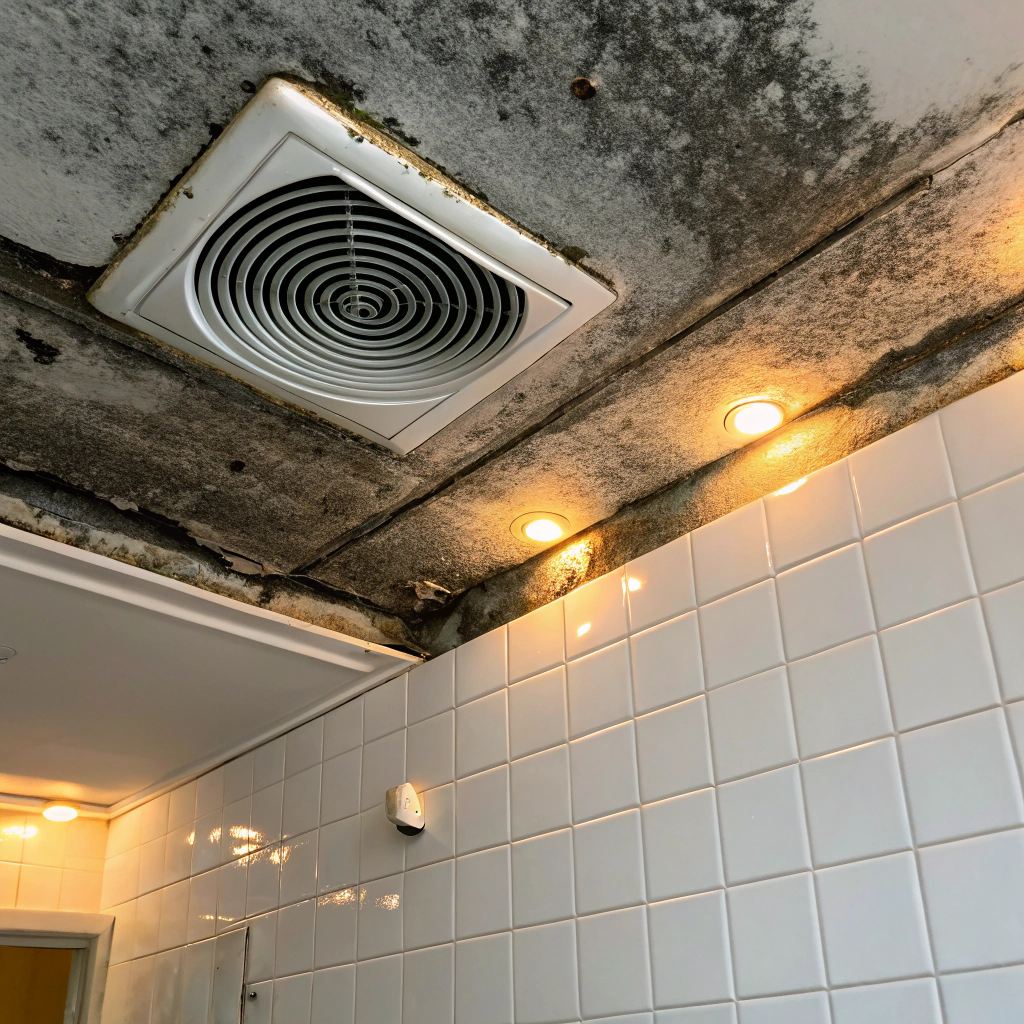
The Health Case for Acting Quickly — Especially in Bedrooms
Ceiling mould in a bedroom deserves particular attention. Most people spend six to eight hours sleeping directly beneath that surface — and during sleep, you’re breathing the air in that room continuously, without the distraction of daily activity to take you elsewhere.
Mould on ceilings releases spores into the air below. In an enclosed bedroom, particularly overnight with windows closed, spore concentrations can build up at their highest point during the hours you’re least aware of it. For households with children, asthma sufferers, or anyone dealing with unexplained morning congestion, a mould-affected bedroom ceiling is worth treating with genuine urgency.
We’re not here to alarm anyone — mould is a fixable problem. But a bedroom ceiling is not the place to wait and see. The sooner the moisture source is identified and the ceiling treated, the sooner that room is safe to sleep in again.
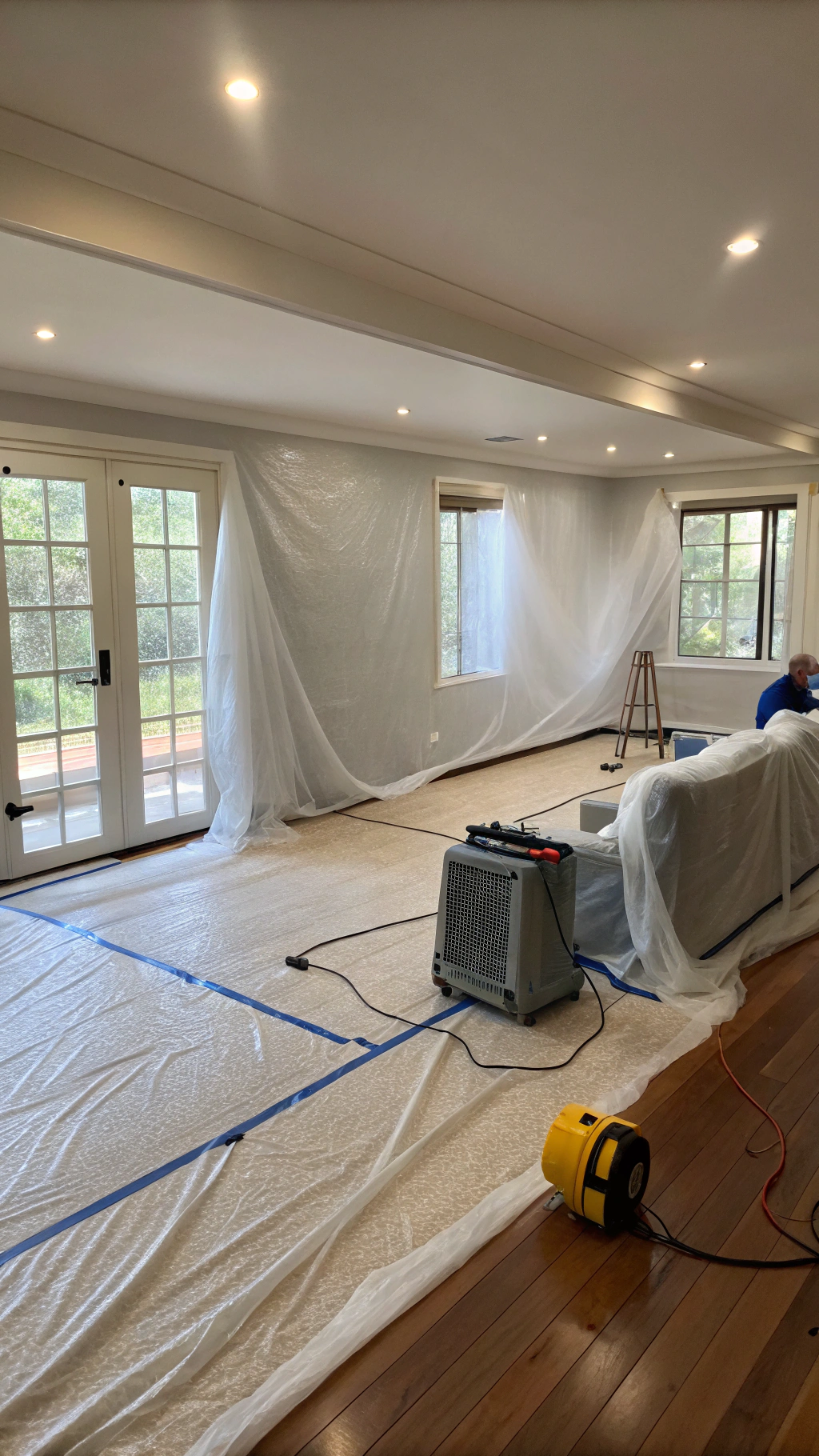
What Professional Ceiling Mould Removal Involves
Our process is systematic. We don’t treat the ceiling until we know what’s causing the problem.
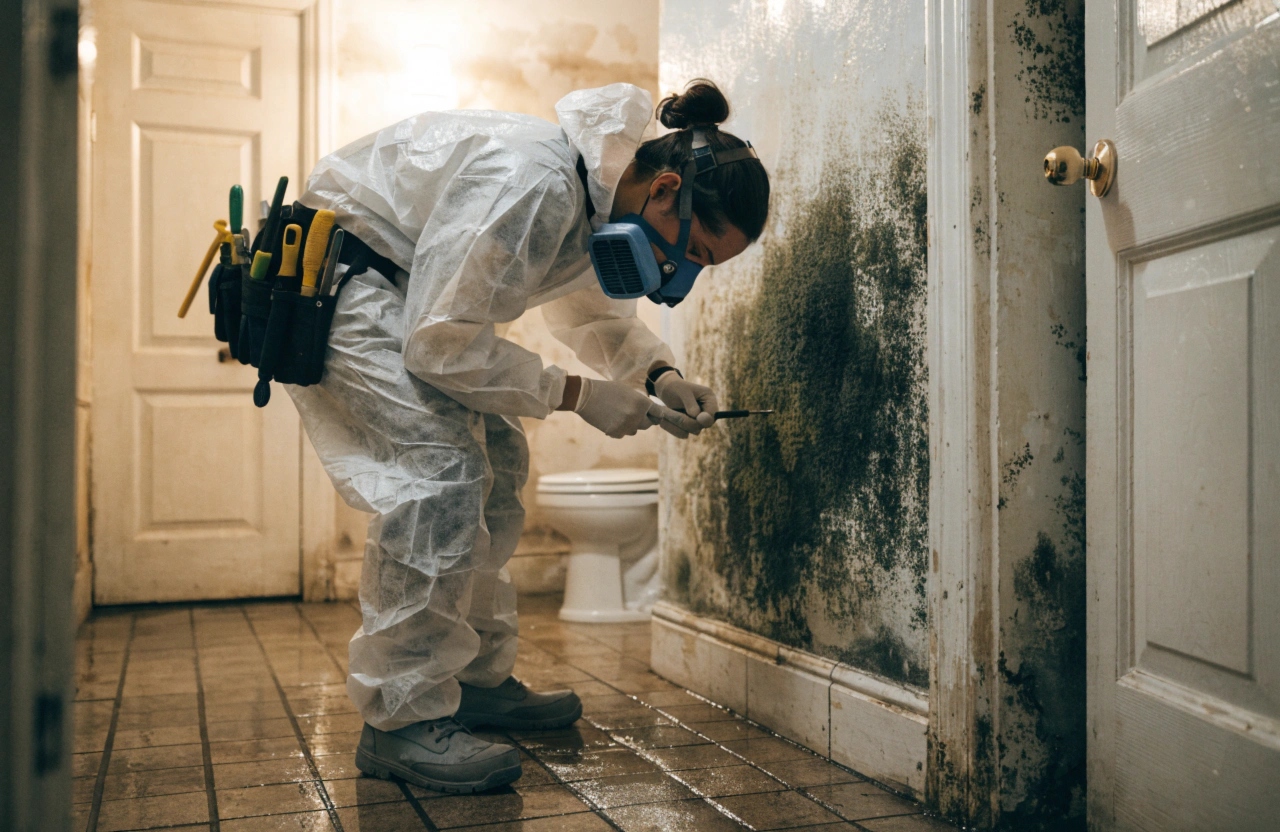
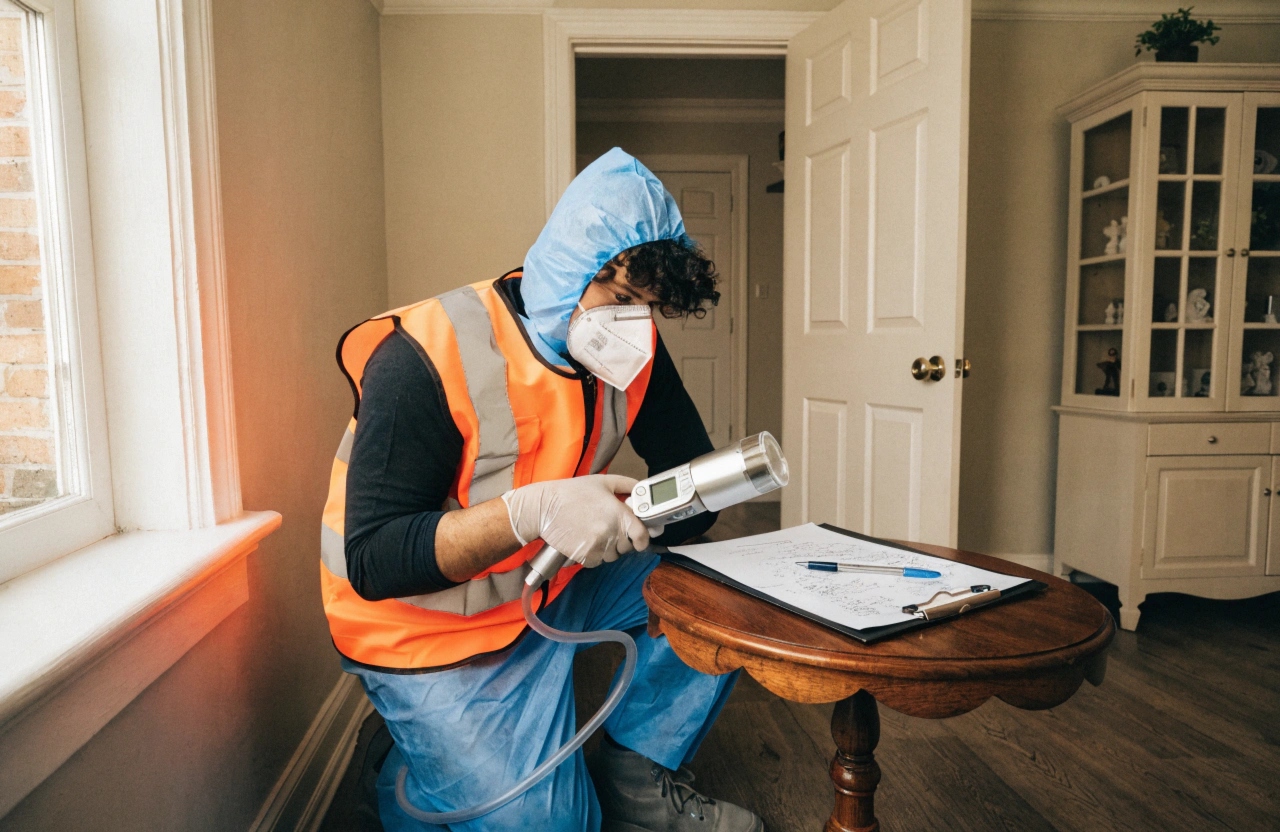
We investigate the moisture source first — using moisture meter readings, thermal imaging where needed, and a visual inspection of the roof space where accessible. Identifying the cause before any treatment begins is what separates a lasting result from a temporary fix.
We set up containment sheeting and HEPA air filtration before any work begins. Where species confirmation is needed, surface testing is carried out. We then HEPA vacuum the affected ceiling area and apply an antimicrobial treatment. Older materials are handled under safe work protocols throughout.
Once treatment is complete, we apply a protective coating to inhibit regrowth. Where plasterboard integrity has been compromised, we issue a replacement recommendation as part of the report. Every job is completed with a written remediation report documenting the moisture source, treatment process, and outcome.
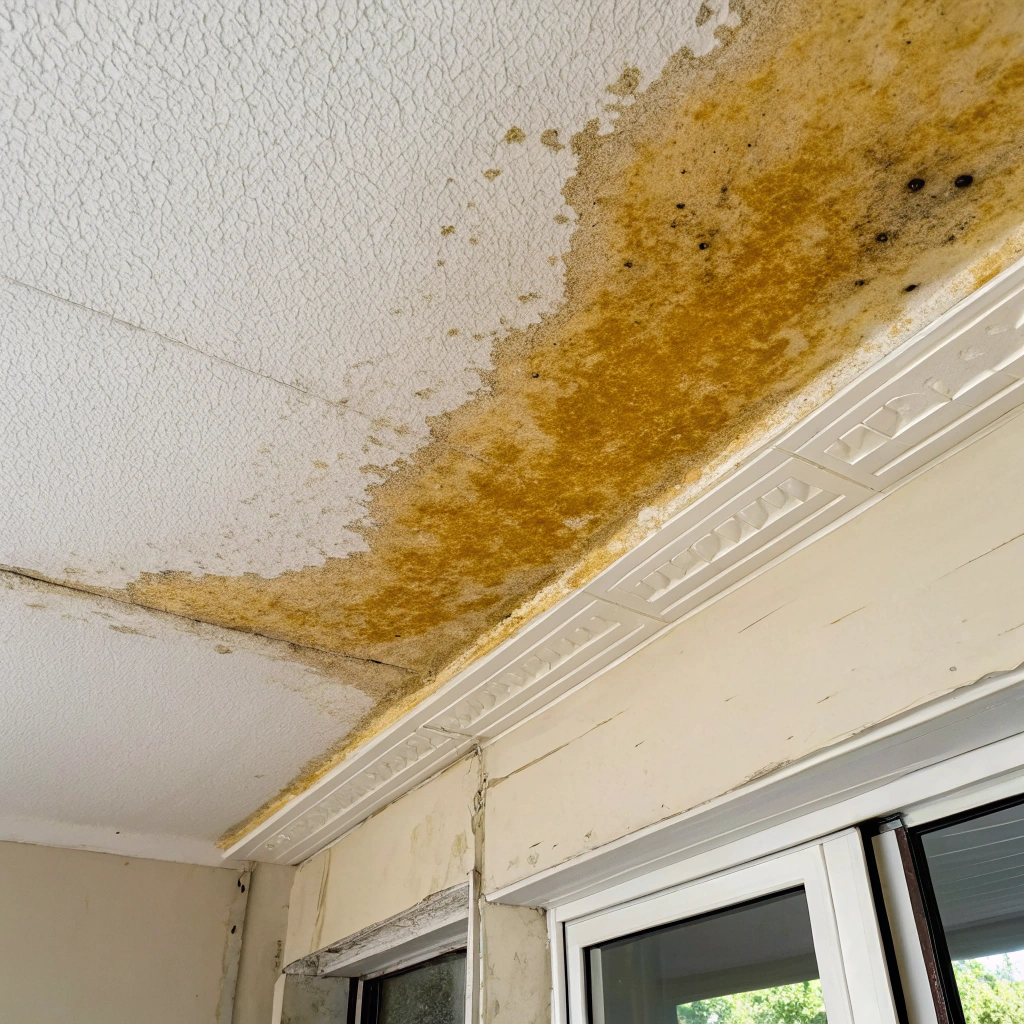
Why Ceiling Mould Removal Is More Complex Than Wall or Floor Mould
Working overhead creates containment and safety challenges that simply don’t apply to walls or floors.
Containment & Spore Control: When ceiling mould is disturbed, spores fall directly downward — onto furniture, bedding, and flooring below. Without containment sheeting and HEPA air filtration in place before work begins, the removal process can spread spores through the living space. Most DIY attempts skip this step, which can leave air quality worse than before.
Material & Age Considerations: Many Central Coast homes built before 1990 have fibrous cement sheeting or ceiling materials that may contain asbestos. Before any mould work proceeds on these properties, the ceiling material needs to be assessed. This is a genuine safety issue — not an added cost. If you’re unsure what your ceiling is made of, that assessment is the right place to start.
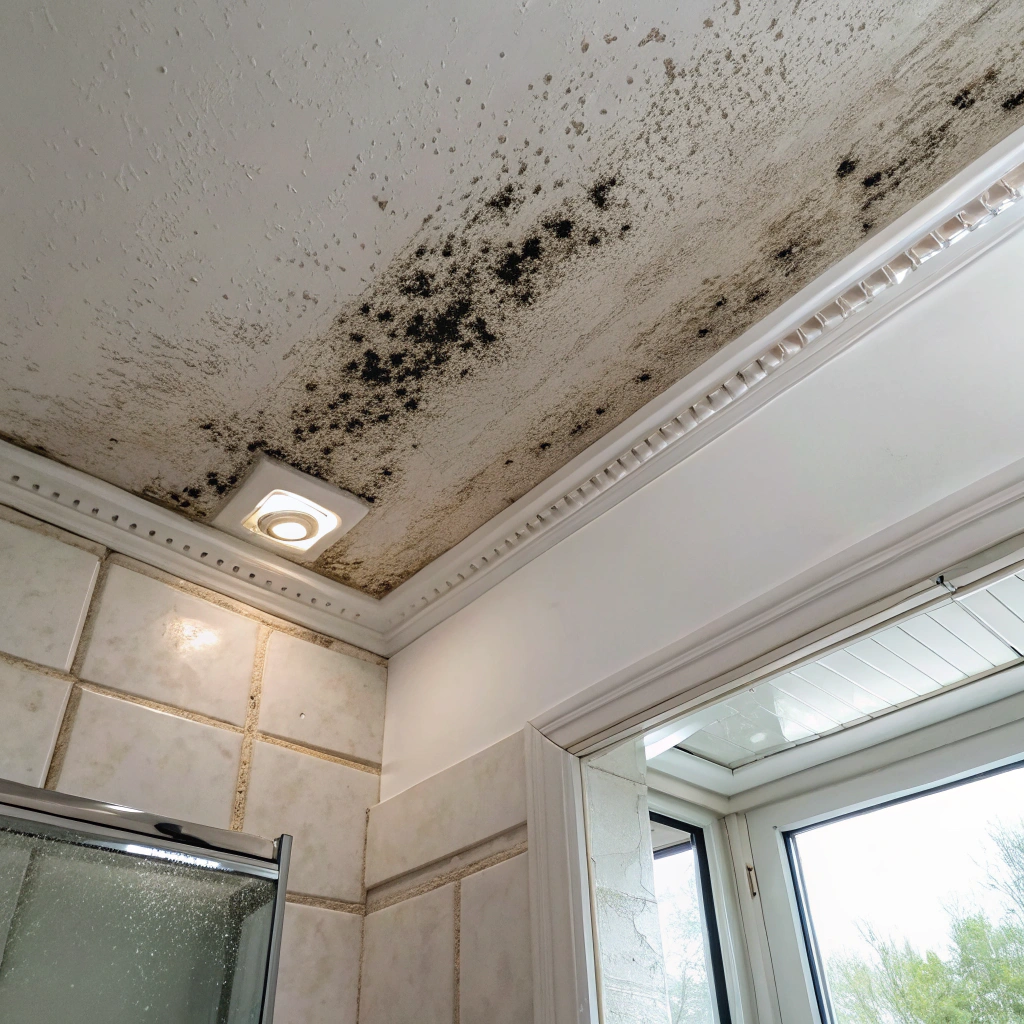
Ceiling Mould in Strata & Apartment Buildings
Ceiling mould in apartments is a different problem to a standalone home — and a more complicated one to resolve. In most cases it’s caused by water ingress from the unit above or a failure in shared roof infrastructure, which immediately raises the question of who is responsible for fixing it.
These situations involve multiple parties — the lot owner, the body corporate, and the strata manager — and without documented evidence of where the moisture is coming from, they can drag on for months. We work regularly across Gosford CBD, Terrigal, and the beachfront apartment precincts of the Central Coast, and we know how these disputes play out. A professional inspection report with clear moisture source evidence is what moves a strata or insurance claim forward. We provide exactly that.
When Ceiling Plasterboard Needs Replacing, Not Treating
Not all ceiling mould can be treated in place. Plasterboard that has absorbed sustained moisture over a long period loses its structural integrity — and treating the surface of a ceiling that is already soft, sagging, or actively delaminating doesn’t fix the underlying problem.
When we assess a ceiling and find visible water staining, soft spots, or signs of structural compromise, we recommend replacement rather than treatment. That’s not an upsell — it’s the honest call. A ceiling that’s treated in place but fails structurally six months later serves nobody. We’d rather tell you upfront what the ceiling actually needs than have you back in the same position before the year is out.
Frequently Asked Questions
If the mould covers an area larger than a dinner plate, has returned after previous cleaning, or is located in a bedroom or living area where the family spends significant time, we recommend a professional assessment. Size and location both matter.
In most cases, no. We set up containment and HEPA filtration to protect the rest of the home during treatment. We’ll let you know before we start if the scope of the job requires any temporary relocation.
Most residential ceiling mould jobs are completed in a single visit. Larger affected areas or jobs requiring plasterboard replacement will take longer. We give you a clear timeframe before work begins.
Because the moisture source was never addressed. Surface cleaning removes visible growth but leaves the underlying cause active. We identify and document the moisture source as the first step of every job.
Painting over mould without treating it first and fixing the moisture source means the mould will work its way back through within a season. It’s the most common reason we see repeat problems in Central Coast homes.
It can be more complex. Homes built before 1990 may have ceiling materials containing asbestos. We assess the ceiling material before any work proceeds — this is a standard part of our process for older properties, not an optional add-on.
Yes. Every job includes a written remediation report documenting the moisture source, the treatment carried out, and the outcome. You can use this for insurance purposes, rental property records, or strata claims.
Cost depends on the size of the affected area, the ceiling material, and the moisture source involved. We provide a clear quote after assessment — no hidden costs and no surprises on the day.
When the moisture source is properly identified and addressed, yes. Treatment combined with moisture control produces lasting results. Treatment alone — without fixing what’s causing the problem — will not.
Get Your Ceiling Assessed by Central Coast Mould Specialists
Ceiling mould doesn’t resolve on its own — and the longer the moisture source stays active, the more work the ceiling has to do to recover. If you’ve spotted mould on your ceiling, or it’s come back after a previous clean, we’re ready to help.
We service Gosford, Wyong, Terrigal, Woy Woy, The Entrance, Umina Beach, Tuggerah, Ettalong Beach, and Avoca Beach.
ClearAir Mould Removal Central Coast 📞 02 4307 5006
Every job includes a written remediation report. We identify the moisture source first — then we fix it.
